The Greatest Achievements of North Korea's 8th Party Congress and Prospects for the 9th Party Congress
- Commentary
- December 05, 2025

- Ho Ryung LEE
- Senior Research Fellow, Korea Institute for Defense Analyses (KIDA)
Ho Ryung Lee, Senior Research Fellow at KIDA, analyzes the achievements of the 8th Congress of the North Korea’s Workers' Party and forecasts the 9th Congress. The author identifies the greatest achievements of the 8th Congress as national defense (enhancement of nuclear and missile capabilities) and diplomacy (strengthening the North Korea-China-Russia solidarity). Dr. Lee assesses that the upcoming 9th Congress will likely emphasize a ‘victory and accomplishments’ narrative, focusing on strengthening integrated nuclear and conventional forces and preparing for war based on new technologies.
■ See Korean Version on EAI Website
Ahead of the 9th Party Congress in 2026, North Korea is making a final push to complete the tasks and achievements of its 8th Party Congress. As the comprehensive review of the past five years across all sectors will be linked to the direction of the 2026-2030 Five-Year Plan to be announced at the 9th Party Congress, 2025—the final year of the 8th Party Congress—is busy with a speed campaign to publicize task achievements and deliver results in each sector. Nevertheless, the areas where North Korea has achieved more than expected during the 8th Party Congress period, and which can be counted among its greatest accomplishments, are national defense and diplomacy. This is due to its strategic exploitation of the instability in the international structure caused by the prolonged Russia-Ukraine war and the deepening strategic competition between the U.S. and China.
Goals and Achievements in the Defense Sector
At its 8th Party Congress in 2021, North Korea emphasized the advancement of nuclear technology, the miniaturization and lightweighting of nuclear weapons, and their tactical weaponization to complete the great cause of nuclear force development. It presented the following as the “Five Major Tasks for Strategic Weapons”: ① developing hypersonic weapons, ② producing super-large nuclear warheads, ③ improving strike accuracy within a 15,000km range, ④ developing submarine- and ground-launched solid-fuel ICBMs, and ⑤ developing nuclear submarines and SLBMs as the “Five Major Strategic Weapons Tasks,” demanding their early achievement. It also demanded that the core objectives of the military-industrial complex achieve ① intelligent, ② precise, ③ unmanned, ④ high-performing, and ⑤ lightweight weaponry. It unconditionally required the completion of defense science and technology development and military production goals and tasks by 2025 to guarantee the strongest military power.
If the defense achievement of the 7th Party Congress was the declaration of “nuclear force completion” through the first test launch of the new ICBM Hwasong-15, the 8th Party Congress can be assessed as a period for building comprehensive capabilities to achieve the “great cause of nuclear force completion.”[1] First, the quantity of nuclear weapons increased, diversifying means of nuclear delivery, and the cycle for new improvements shortened. In addition to the phased expansion of the Yongbyon enrichment facility, satellite imagery captured[2] construction activity for a new enrichment facility within the Yongbyon nuclear complex last June. This indicates that North Korea's nuclear weapon production capacity will increase to 127-150 weapons by 2025, 201-243 weapons by 2030, and 344-429 weapons by 2040.[3] The first test launch of the Hwasong-17 ICBM took place in 2022, followed by the Hwasong-18 in 2023 and the Hwasong-19 in 2024, with each test enhancing its performance. Among the solid-fuel-based Hwasong-18 and Hwasong-19 models, the Hwasong-19 was touted as the “final, perfected ICBM” after its test launch. At last October's 80th anniversary military parade, the Hwasong-20, featuring a multiple warhead configuration, was unveiled as the latest model. Furthermore, North Korea has steadily improved the performance of its diversified delivery systems, including the hypersonic missile Hwasong-16-Na, the upgraded Bulhwasal-3-31 strategic cruise missile, and test launches of new surface-to-air missiles. Furthermore, to build underwater nuclear capabilities, it launched the tactical nuclear-capable submarine ‘Hero Kim Gun-ok’ in September 2023, followed by the 5,000-ton class submarines ‘Choe Hyun’ and ‘Kang Gon’ in April and June 2025, respectively.
Second, laws, policies, and plans based on the advancement of nuclear capabilities have been specified and made visible. On September 8, 2022, the 7th Session of the 14th Supreme People's Assembly announced the Nuclear Force Policy Law, which includes preemptive nuclear strikes. And at the 6th Plenary Meeting of the 8th Central Committee in December 2022, South Korea was designated a ‘clear enemy,’ with 2023 set as the year for a ‘transformative strategy for nuclear force and national defense development’ based on mass production of tactical nuclear weapons and exponential growth in nuclear warheads. Accordingly, in March 2023, the national nuclear weapons integrated management system, the “Nuclear Trigger,” was announced. On August 31, the first full-scale command training exercise since Kim Jong Un's rule was conducted, and a new “invasion operation plan” was unveiled, centered on combining conventional forces with nuclear use. The 9th Plenary Meeting of the 8th Central Committee in December 2023 emphasized “preparations for a major upheaval to subjugate the entire territory of South Korea by mobilizing all physical means and capabilities, including nuclear forces, in times of emergency.” From 2025, with the second Trump administration, emphasis shifted to nuclear combat readiness, the nuclear shield doctrine, and the modernization of the army, navy, and air force. North Korea maintains that nuclear weapons are not “bargaining chips” but “unchanging, practical weapons for use,”[4] asserting that “nuclear weapons are peace, sovereignty, and a legitimate means of self-defense granted by the national constitution.” It insists that “the new nuclear force strengthening line proclaimed by the head of state must be consistently upheld.”[5]
Third, organizational changes included expanding the role of the military-political leadership and enhancing the operational efficiency of the Party Central Military Commission. The efficiency of its operations was also evident in the frequency of meetings held by the 8th Party Central Military Commission. It convened twice in 2021, once in 2022; and four times in 2023—an unusual number—alongside zero “completion of war readiness preparations” in 2024, and one in 2025. This annual variation in the number of expanded Central Military Commission meetings coincides with external factors: the timing of North Korea's military support that goes into to the Russia-Ukraine war and the intensification of its hostile policy toward the South. Meanwhile, starting with the Nuclear Force Policy Law and tactical nuclear training in September 2022, North Korea also began revealing organizational restructuring of the formation and operation of its national nuclear force command structure. The Missile Bureau was first identified in 2023, and the Detection and Electronic Warfare Bureau was first identified in 2025. Additionally, with the emphasis on strengthening naval power and maritime defense capabilities, the tasks and roles of the Maritime Guidance Bureau have also changed and expanded.
Ultimately, the new defense policy Kim Jong Un stated he would present at the 8th Party Congress during his on-site guidance in March 2020 can be described as enhancing assertiveness and building operational capabilities based on the simultaneous development of strategic and tactical nuclear weapons and the preemptive use of nuclear weapons.
Goals and Achievements in the Diplomatic Front
Kim Jong Un's summit diplomacy, initiated around the 2018 inter-Korean summit, led to bilateral meetings between North Korea and China, North Korea and the U.S., and North Korea and Russia. These were highlighted as diplomatic achievements of the 7th Party Congress. However, after the breakdown of the Hanoi summit between North Korea and the U.S., Kim Jong Un's summit diplomacy failed to yield tangible results.
The diplomatic achievements of the 8th Party Congress, however, are different. The June 2024 Treaty on Comprehensive Strategic Partnership between Russia and North Korea expanded and elaborated the scope and structure of cooperation beyond the 1961 North Korea-Soviet Union Treaty of Friendship, Cooperation, and Mutual Assistance, which included automatic military intervention. Furthermore, Kim Jong Un's summit diplomacy expanded from bilateral to multilateral arenas, exemplified by his attendance at China's 80th Anniversary of Victory Day celebrations in September 2025.
The shift in the priority of foreign relations principles at the 8th Party Congress, suggesting a return to Cold War dynamics—from ‘independence-peace-friendship’ to ‘independence-friendship-peace’—has developed into strengthened strategic relations between North Korea and Russia, North Korea and China, and strategic solidarity among North Korea, China, and Russia. Simultaneously, North Korea has defined the U.S. and South Korea as its “principal enemy” and “first enemy,” respectively. Since the 5th Plenary Meeting in June 2022, it has abandoned the “first strike, first response” principle and consistently adhered to the struggle principle of “strength against strength, head-on confrontation.” The outcome of the Sixth Plenary Meeting in January 2023,[6] which replaced the New Year's Address, attributes the cause of this policy shift to changes in international relations. It stated that the international landscape has clearly shifted toward a new Cold War system and that the trend toward multi-polarity has accelerated further. It presented the principles for foreign affairs as ‘enhancing national prestige,’ 'defending national sovereignty,' and 'safeguarding national interests.' North Korea itself proclaims its ‘status as a powerful nation’ and asserts it must write a diplomatic history befitting this status. It pursues nuclear coercion against the US, South Korea, and Japan, while seeking to strengthen strategic solidarity with pro-Russian nations and the Global South.
Goals and Policy Direction for the 9th Party Congress
Given that the 2022 Russia-Ukraine war and the 2025 U.S.-China tariff confrontation under a second Trump administration provided favorable conditions for advancing the tasks of the 8th Party Congress, the 9th Party Congress will be fundamentally different from the 8th, which publicly offered an ‘apology.’
The 9th Party Congress is highly likely to prominently feature achievements in national defense and diplomacy, emphasizing ‘victory’ and ‘accomplishments,’ while actively presenting development tasks for each sector. In the defense sector, based on its mention of strengthening the parallel development of nuclear and conventional forces,[7] it is expected to pursue enhancing North Korea-style integrated nuclear-conventional operations (CNI) capabilities through the modernization of conventional forces. Particularly, with lessons from the Russia-Ukraine war, the pace of building low-cost, highly-efficient military capabilities based on emerging technologies such as drone warfare, and strengthening air force and navy capabilities, is expected to accelerate.
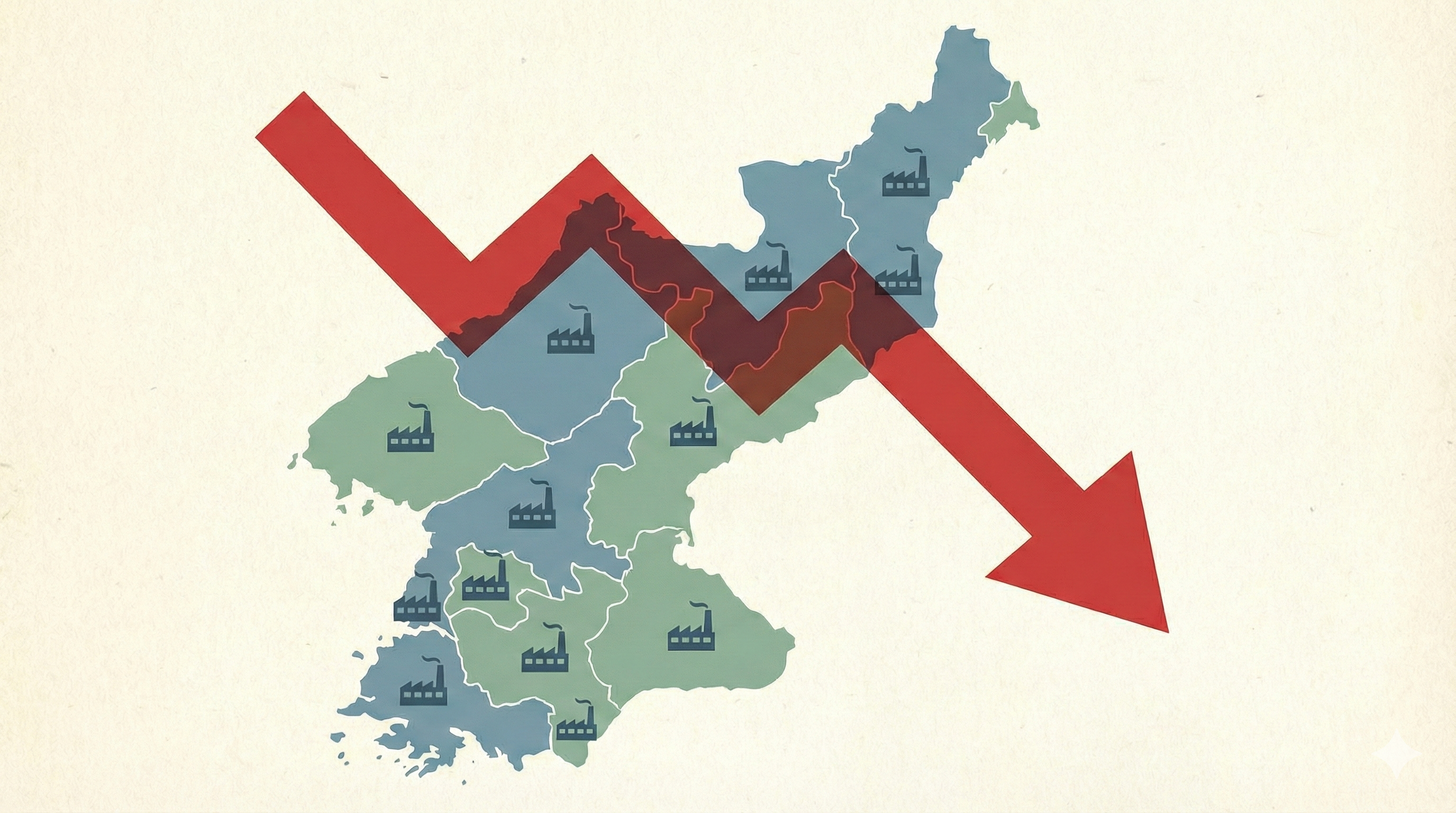
North Korea’s economic policy is also expected to shift from the existing ‘maintenance and reinforcement’ approach to presenting a vision such as the ‘Five-Year Plan for Comprehensive Revival and Transformation in the New Era of Development.’ However, as demands for nuclear readiness are predicted to intensify at the 9th Party Congress, growth through ‘comprehensive revival and transformation’ via strategic solidarity with revisionist states appears limited. The concentration of national resources on defense spending will be even greater than during the period of the 8th Party Congress, and changes in North Korea's external environment due to the potential end of the Russia-Ukraine war could also impact the situation during the 9th Party Congress period. Moreover, the next five years, 2026-2030, to be outlined at the 9th Party Congress, represent a decisive phase where major turning points in the international structure and Northeast Asia will be formed. North Korea is highly likely to adopt an even more aggressive approach to its nuclear capabilities and coercion against the South to strategically leverage this transformative phase of international system.
Therefore, in order for the Lee Jae Myung administration's North Korea policy, the E.N.D. (Exchange, Normalization, Denuclearization) initiative to function, it needs to move beyond the existing ‘engagement and pressure’ debate and framework focused on conventional actors. It appears more necessary to seek ‘creation of opportunities’ that can strategically leverage the phase of international system transformation. ■
[1] On November 29, 2017, following the launch of the ICBM-class Hwasong-15, North Korea declared the completion of its nuclear force. On November 29, 2022, the fifth anniversary of that declaration, the Rodong Sinmun reported on the November 18 launch of the Hwasong-17, stating: “a creation of self-reliance made with our own strength, wisdom, and technology,” listing the achievements of various Juche weapons. Regarding the October 31, 2024 test launch of the Hwasong-19, it emphasized securing the “final, complete ICBM” to operate alongside the Hwasong-18 and “ensuring absolute superiority and hegemonic status in nuclear supremacy and strategic forces.” Kim Jong-un described it as a decisive milestone for the “absolute irreversibility of hegemonic status” and the “perpetuation of absolute superiority” of strategic nuclear forces. Korean Central News Agency, November 1, 2024.
[2] “New Nuclear Facility in Yongbyon Detected by Satellite,” KBS, June 10, 2025.
[3] Lee Sang-gyu, “Analysis of Recent Changes in North Korea's Nuclear Weapons Production Capabilities and Considerations for Denuclearization,” Security Strategy FOCUS, KIDA, July 17, 2025.
[4] Korean Central News Agency, February 8, 2025.
[5] Korean Central News Agency, February 18, 2025.
[6] Rodong Sinmun, January 1, 2023
[7] Kim Jong Un stated during his on-site guidance of the Armored Defense Weapons Research Institute and the Electronic Weapons Research Institute of the Academy of National Defense Science on September 11 and 12 that he would propose a policy of simultaneous development of nuclear weapons and conventional weapons at the 9th Party Congress. Korean Central News Agency, September 13, 2025.
■ Ho Ryung LEE is a Senior Research Fellow at the Korea Institute for Defense Analyses.
■ Translated and edited by Inhwan OH, EAI Senior Research Fellow; Sangjun LEE, EAI Research Associate
For inquiries: 02 2277 1683 (ext. 211) | leesj@eai.or.kr