■ See Korean Version on EAI Website
Chapter 1. Introduction
1.1. Background
In recent years, the North Korean economy has shown a recovery that has exceeded expectations. North Korea's real GDP, as estimated by the Bank of Korea, exhibited a stepwise decline over the 2017-2022 period due to intensified sanctions against North Korea and COVID-19 border lockdowns, but rebounded to positive growth of 3.1% in 2023 and 3.7% in 2024. North Korean authorities themselves have also displayed confidence in these economic achievements. At the 13th Plenary Meeting of the 8th Central Committee of the Workers' Party held at the end of 2025, the regime proclaimed the completion of the “Five-Year Plan for National Economic Development (2021-2025)” and recent achievements in regional development policy. Subsequently, at the 9th Party Congress held in February 2026, it presented the ambitious industrial goal of achieving a 1.5-fold increase in industrial output over the next five years (Rodong Sinmun, December 12, 2025; February 26, 2026).
Two main drivers underlie this recovery. The first is the resumption of trade with China following the lifting of COVID-19 border restrictions. Starting in the second half of 2022, imports recovered to nearly pre-COVID-19 levels, while exports reached their highest volume since the tightening of sanctions against North Korea, driven by an expansion of processing-on-commission trade and exports of non-sanctioned minerals. With North Korea's former mainstay export items banned under UN Security Council resolutions, processed human hair products, watches, and tungsten and molybdenum have emerged as substitute exports. The second driver is the economic stimulus generated by the Russo-Ukrainian War that broke out in 2022. In exchange for supplying conventional munitions such as artillery shells and ballistic missiles to Russia, North Korea has gained improved access to essential goods such as food and refined oil, and military cooperation appears to be gradually expanding into the economic sphere as well (Kim and Nam, 2025; Park, 2025).
However, structural vulnerabilities lie beneath these recovery indicators, as the recovery is driven primarily by heavy dependence on a single market (China) and by temporary demand generated by the war. In particular, although exports are increasing in quantitative terms, this growth is concentrated in a small number of sectors driven by short-term Chinese and Russian demand, raising doubts about the sustainability of the current recovery. Accordingly, this study aims to critically examine North Korea's economic recovery amid recent favorable changes in its external environment, through a structural analysis of its foreign trade, and to assess whether North Korea can achieve long-term, trade-led economic growth. Furthermore, based on the results of this analysis, the study seeks to offer implications regarding the structural limits of North Korea's current economic policy and its prospects for change.
1.2. Scope and Structure of the Report
This report sheds light on the current state of the North Korean economy through an analysis of the qualitative level of its trade structure. Beyond simple trade volume statistics, it comprehensively considers the qualitative upgrading of exports, the degree of diversification of trading partners, and changes in price competitiveness and bargaining power, in order to determine whether the current economic recovery represents a short-term rebound or entry onto a long-term growth path.
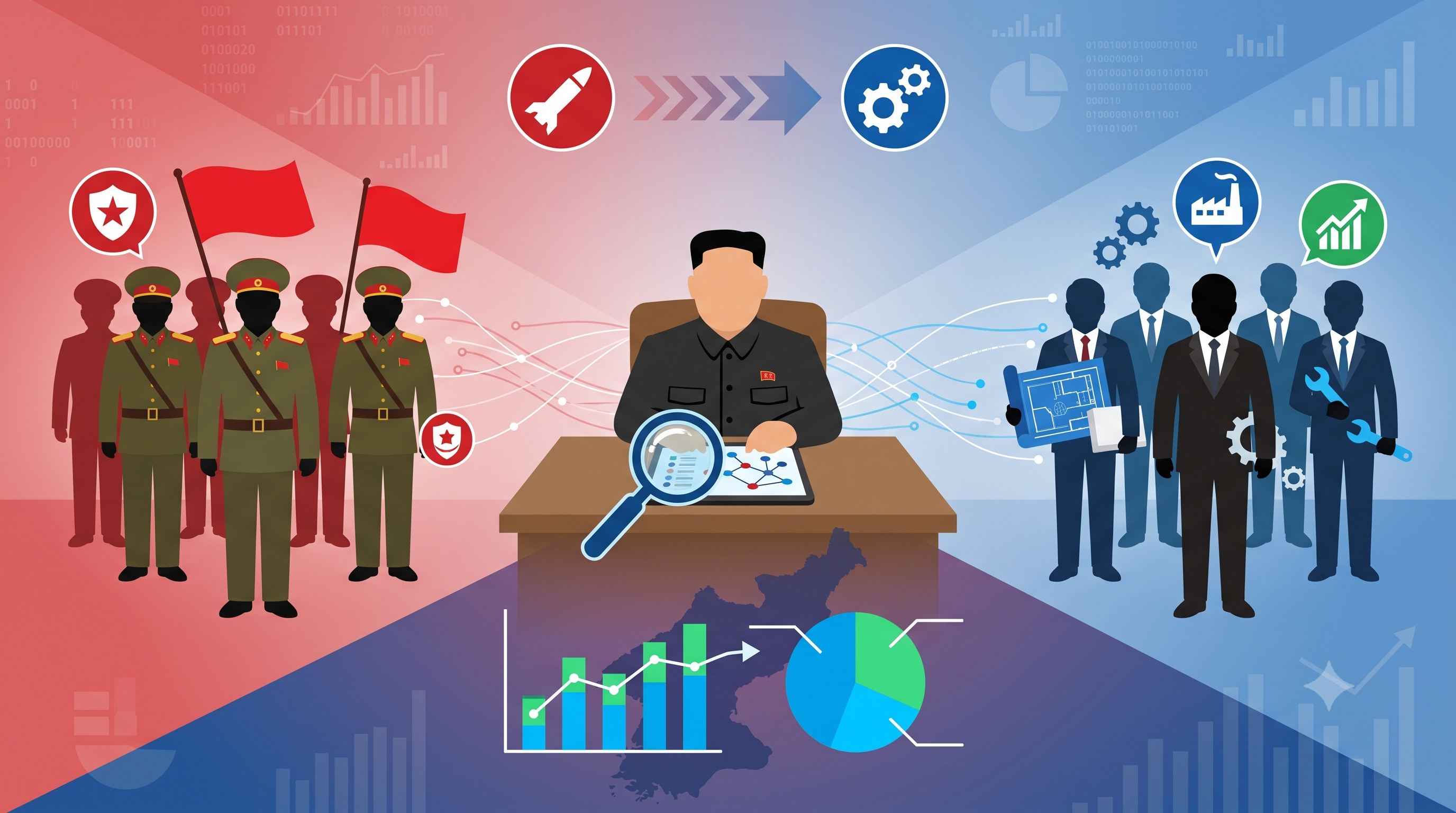
To this end, the report proceeds as follows. Chapter 2 examines how the economic policy of the Kim Jong Un regime shifted around the time of the breakdown of the 2019 Hanoi U.S.-North Korea summit. By contrasting the limited opening and decentralization policies of its early years in power with the self-reliance and re-centralization stance adopted after the Hanoi breakdown, it lays the groundwork for understanding the policy context of the current North Korean economy. Chapter 3 evaluates the quantitative growth and qualitative level of trade with China through three indicators—export item diversity, export industry upgrading, and relative prices—and also examines the significance and structural limits of expanded economic cooperation with Russia. Finally, Chapter 4 comprehensively assesses the sustainability of the current strategy, forecasts North Korea's future trajectory with a focus on four key variables that could drive policy change, and offers policy recommendations based on this analysis.
Chapter 2. Trends in North Korea's Economic Policy: The Shift Around 2019
2.1. Market Acceptance and Limited Opening Policies in the Early Kim Jong Un Era
Kim Jong Un, from the early years of his rule (2012-2016), espoused the “Byungjin” (parallel development) policy of simultaneously pursuing economic development and nuclear weapons development, while adopting a pragmatic approach that substantially embraced market mechanisms. The economic policy of this period had the character of limited reform and opening, centered internally on decentralization and the introduction of incentives, and externally on attempts at joint ventures and foreign capital attraction. This represented an advance over the economic management approach of the preceding Kim Jong Il era, and was also an attempt by the regime to officially acknowledge and make use of the reality of marketization that had spontaneously spread within North Korea (Lee et al., 2018; Hong and Kim, 2021).
In the industrial sector, the regime introduced the “Socialist Enterprise Responsibility Management System,” granting enterprises managerial autonomy and profit-seeking incentives and allowing them to independently establish part of their own production and sales plans. This amounted, in effect, to tolerating a form of independent accounting at the enterprise level, and represented a compromise approach aimed at raising micro-level efficiency while maintaining the framework of the centrally planned economy. In the agricultural sector, the “Farm Responsibility Management System (Field Sub-Work Team System)” was implemented, dividing existing sub-work teams into small work units of three to five households and restructuring the system so that output exceeding the state procurement quota would be distributed within the relevant work unit, thereby inducing higher agricultural productivity. Although this measure falls short of China's household-farming system introduced under its agricultural reforms of the late 1970s, it bears a structural resemblance in that it introduced incentives for individual cultivation while maintaining the collective farm system. In the external economic sector, North Korea attempted to attract foreign investment by newly designating numerous “economic development zones” in addition to existing special zones such as Rason and Hwanggumphyong-Wihwado (Yang et al., 2015). However, no active institutional improvements related to foreign investment were made, and as international sanctions against North Korea gradually intensified after 2016, no substantive results were achieved.
Another feature of external economic policy during this period was the relative diversification of trading partners. Although dependence on China was increasing, inter-Korean economic cooperation projects retained a foothold through the Kaesong Industrial Complex, and the possibility of cooperation with other neighboring countries had not been entirely foreclosed. However, this diversified structure gradually collapsed as the UN Security Council adopted a series of resolutions in response to nuclear tests and missile provocations. Over the course of the intensified sanctions phase of 2016-2017, North Korea's external economic relations effectively converged on a single channel with China.
2.2. After the 2019 Hanoi Breakdown: Strengthened Self-Reliance and Central Control
The breakdown of the U.S.-North Korea Hanoi summit in February 2019 marked a major turning point in North Korea's economic policy. At this summit, North Korea proposed dismantling the Yongbyon nuclear facility in exchange for a substantial easing of five core sectors of UN Security Council sanctions, including the coal export ban, but the negotiations collapsed when the U.S. rejected this proposal. This breakdown convinced the North Korean leadership that sanctions relief through improved relations with Washington was unlikely in the short term. Accordingly, North Korea adopted “self-reliance” and the “frontal breakthrough” as its strategic keynotes, shifting toward a course of forging its own economic breakthroughs under continued sanctions rather than waiting for the external environment to improve (Cho et al., 2022).
In terms of domestic economic policy, this shift entailed a retreat from the decentralization stance of its early years in power toward the reinforcement of central control. In the area of enterprise management, the “Enterprise Law” was revised in 2020 to strengthen central management and supervisory functions and to narrow the scope of enterprises' independent management (Yang, 2023). This stemmed from the judgment that the autonomous profit-seeking behavior of enterprises, spreading along with the expansion of markets, was weakening the control of central planning, and represented a choice that prioritized controllability over efficiency. In the area of foreign trade, the January 2022 revision of the Trade Law restored and strengthened the “state monopoly on foreign trade,” confining trade to state-designated institutions, thereby revealing an intent to suppress informal and individual trade (Yonhap News Agency, 2022). In the commercial distribution sector, the regime emphasized a unified commercial management system and expanded the state commercial network, and in 2023 it attempted to confine grain transactions exclusively to grain management offices. In the financial sector, it tightened regulations on the use and exchange of foreign currency in an effort to curb dollarization.
A clear shift also appeared in external strategy. The strengthening of economic and military cooperation with authoritarian states (China and Russia) emerged as the central axis of strategy, while inter-Korean relations were effectively severed. After Kim Jong Un defined inter-Korean relations as “a hostile relationship between two states” at the 9th Plenary Meeting of the 8th Central Committee of the Workers' Party in December 2023, he proceeded to abandon the discourse of unification altogether, promulgating in March 2026 a revised constitution that newly established territorial provisions while deleting references to unification (Oh, 2026). North Korea has also actively perceived shifts in the international order, such as the Russia-Ukraine war and U.S.-China hegemonic competition, as strategic opportunities that can be exploited within a “new Cold War” framework. Amid fragmentation of the free trade system and the reorganization of global value chain (GVC) structures, North Korea is seeking a new role as a supplier within the authoritarian bloc.
A pragmatic cost-benefit calculation also underlies North Korea's hardening of inter-Korean relations. The potential benefits North Korean authorities could obtain from inter-Korean relations include revenue from economic cooperation projects, international aid, and the facilitation of foreign investment attraction. However, the realization of these benefits remains remote under the current sanctions environment. By contrast, the costs of inter-Korean relations—the spread of North Korean residents' longing for South Korean society, driven by the infiltration of South Korean culture and the economic gap between the two Koreas, and the consequent loosening of social control—continue to accrue even in the absence of any special exchange. In particular, as revealed by the enactment of the “Law on Rejecting Reactionary Ideology and Culture” in 2020 and the strengthening of related penalties, the North Korean authorities take the threat that the inflow of external culture and information poses to regime stability very seriously. In other words, the judgment has taken hold that the benefits of improved inter-Korean relations are uncertain while the costs are certain, and this is judged to be the fundamental reason North Korea seeks to exclude relations with South Korea while strengthening solidarity with authoritarian states.
Chapter 3. Structural Limits of China-Dependent Trade: Quantitative Recovery and Qualitative Stagnation
3.1. Quantitative Recovery in Trade with China and Characteristics of the Export Structure
Since the second half of 2022, North Korea's trade with China has shown a rapid recovery. Imports have recovered to nearly pre-COVID-19 levels, while exports have reached their highest volume since the tightening of sanctions against North Korea. This resumption of trade is attributable to the release of pent-up demand suppressed during the lockdown period and to the expansion of processing-on-commission production lines that resumed operation after reopening. However, a closer look at the composition of export items shows that the structure remains essentially similar to that of the pre-sanctions period.
With North Korea's former mainstay export items—minerals (coal, iron ore), apparel, and seafood—banned under UN Security Council resolutions, processed human hair products (wigs and eyelashes), watches, and non-sanctioned minerals such as tungsten and molybdenum have taken their place. North Korea's export structure toward China had already settled, by the late 2000s, into a pattern concentrated in a small number of processed products and mineral products. Although the quantitative scale of exports has expanded, diversification of item composition has not occurred, and this structure has persisted even after the tightening of sanctions completely blocked North Korea's former major export items. Even in the recent recovery phase, export growth has continued to be concentrated in specific items, and North Korea’s single-market dependence—in which the share of exports to China continues to exceed 90% of total exports—has deepened further.
The historical context in which this structure was formed is also important. During China's period of rapid growth in the late 2000s, demand in the coal, steel, and construction sectors surged, which in turn caused explosive growth in demand for North Korean coal; as international coal prices rose two- to three-fold, North Korea reaped enormous foreign-currency earnings. At the same time, as labor costs rose in China, North Korea, capable of low-wage production, began serving as a subcontractor for Chinese firms in processing-on-commission trade such as apparel, further boosting such exports. In this process, North Korea's exports grew substantially in quantitative terms, but specialization deepened in subordination to China's demand structure, leaving export diversification and industrial upgrading unaccomplished.
3.2. Assessing the Qualitative Level of Exports: Three Indicators
For sustainable export-led economic growth, quantitative growth must be accompanied by qualitative improvement. The existing trade literature has shown that qualitative factors of exports—such as the diversification of traded items, the upgrading of export composition, and relative prices—are related to an exporting country's economic growth and productivity (Hummels and Klenow, 2005; Hausmann et al., 2007; Feenstra and Kee, 2008; Schott, 2004). In the cases of successful export-led economic growth in South Korea, Vietnam, and China—which could serve as benchmarks for North Korea's future economic growth—item diversification, upward movement along the value-added chain, and improvement in the terms of trade appeared simultaneously alongside quantitative export growth. The following sections evaluate the qualitative level of North Korea's exports along these three dimensions.
3.2.1. Diversity of Export Items
The export diversity indicator measures how widely distributed export items are, that is, whether trade is expanding along the extensive margin. The more a country's exports are concentrated in a small number of items, the more vulnerable it becomes to shifts in demand or price shocks in a particular market, whereas the more diversified a country's export structure is, the greater its buffering capacity against external shocks. Theoretically, it is known that as an economy develops, its export items become more diversified. However, once income reaches a certain level, exports tend to re-concentrate into high-value-added items, producing an inverted-U-shaped pattern (Imbs and Wacziarg, 2003; Cadot et al., 2011).
According to a recent study (Lee, 2026) that decomposed the long-term trend of North Korea-China trade into the extensive margin, relative price (P), and quantity (Q), the diversity indicator of export items stagnated or even regressed between the late 2000s and the mid-2010s, the very period during which North Korea's exports to China were growing rapidly in quantitative terms. This stands in stark contrast to the steady diversification of export items achieved during the same period by comparator countries such as Vietnam, Myanmar, and Cambodia. In North Korea, the concentration of exports on specific items demanded by China structurally blocked any expansion of the extensive margin itself. This is not a mere statistical phenomenon; it demonstrates that the China-dependent export structure is functioning as a mechanism that suppresses economic diversity.
Figure 1. International Comparison of the Extensive Margin of North Korea's Exports

Source: Author's calculations based on the methodology of Lee (2026) and UN Comtrade data
As COVID-19 border lockdowns were progressively lifted from 2022 onward, North Korea's exports to China also began to show signs of recovery. However, even in this recovery phase, most of the growth in exports to China was found to be attributable to intensive-margin (within-item) growth. In other words, even in the course of recovering from the severe blow that sanctions and COVID-19 dealt to trade with China, the fruits of recovery remain, as in the mid-to-late 2000s, concentrated in a small number of items rather than spread evenly across a diverse range of items.
[Table 1] North Korea's Export Growth to China
|
Growth Rate of
Exports to China
|
Extensive
Margin
|
Intensive
Margin
|
|
2011-2016
|
11.81%
|
0.07%
|
11.75%
|
|
2017-2021
|
-87.69%
|
-57.10%
|
-30.58%
|
|
2022-2024
|
61.31%
|
6.94%
|
54.35%
|
Note: This table decomposes North Korea's export growth rates to China by period into the extensive margin (expansion of item variety) and the intensive margin (within-item growth); each value represents the average annual growth rate. All values represent North Korea's excess growth rate relative to the growth rate of the corresponding item in China's total imports—that is, the imports into China from all countries worldwide.
Source: Lee, Jong-min. 2026. Decomposing North Korea's trade with China and revisiting the effects of sanctions. Asia and the Global Economy. 6, 100143. p. 6.
3.2.2. Upgrading of Export Industries: Revealed Factor Intensity (RFI)
Revealed Factor Intensity (RFI) is an indicator that measures the qualitative level of exports by taking a weighted average of the physical- and human-capital input levels required by each item in North Korea's export composition (Shirotori et al., 2010). Specifically, the average capital input level among countries exporting a given item worldwide is defined as that item's revealed factor intensity, and this is weighted by North Korea's export composition to derive the factor intensity of North Korea's exports as a whole. The higher this indicator, the more North Korea's export structure requires a high degree of human and physical capital; the lower it is, the less the structure requires specialized technology and capital.

When this indicator is applied to North Korea's exports, the analysis shows that the physical- and human-capital input levels of North Korean exports have followed a long-term downward trend since the 2000s, with this decline concentrated in the late 2000s —the period during which the share of exports to China surged (Kim, 2018). By contrast, this phenomenon is not observed in exports to countries other than China. This strongly suggests that the China-dependent export structure is functioning as a mechanism that induces qualitative deterioration.
The mechanism behind this decline can be understood as follows. As dependence on exports to China deepened, North Korea's exports became specialized in simple, repetitive labor and the exploitation of underground resources, such as coal, iron ore, and processing-on-commission trade. Since Chinese demand for these low-technology items has persisted, North Korea's incentive to invest in the development of technology-intensive export items has been structurally blocked. In other words, the China-dependent structure provides stable export earnings in the short term, but in the long term it has taken on the character of a ‘low-technology trap’ that impedes technological upgrading.
Figure 2-1. Physical-Capital Input Level of North Korea's Exports |
Figure 2-2. Human-Capital Input Level of North Korea's Exports |
 |
 |
Source: Author's calculations based on the methodology of Kim (2018) and UN Comtrade data
3.2.3. Upgrading of Export Industries: The Export Sophistication Index
The Export Sophistication Index is an indicator that works backward from a country's export composition to gauge how similar it is to the export structure of high-income countries. The logic behind this index is as follows: by taking a weighted average of the income levels of countries that intensively export a given item, one can estimate the productivity level implied by that item. Applying this measure to a country's overall export composition allows the sophistication and value-added character of its exports to be expressed as a single index. This approach is based on the ‘EXPY index’ calculation method developed by Hausmann et al. (2007) and rests on the theoretical assumption that export structure reflects economic complexity.

The analysis shows that North Korea's export sophistication index fluctuated in the early-to-mid 2000s before turning to a downward trend from the late 2000s onward. Given that in most countries this index generally rises along with GDP growth, the decline in North Korea's sophistication index is an anomalous phenomenon. It implies that North Korea's export structure is gradually converging toward the export patterns of low-income rather than high-income countries (Jung, 2024). It also suggests that North Korea’s export growth has been accompanied not by an improvement in economic complexity but by a regression toward simple labor- and resource-intensive items.
Figure 3. International Comparison of the Sophistication Level of North Korea's Exports

Source: Author's calculations based on the methodology of Jung (2024) and UN Comtrade data
3.2.4. Relative Prices of Exports to China
The relative price index is constructed by comparing North Korea's unit export price for a given item to China with the unit price China pays when importing the same item from other countries. The closer this index is to 1, the closer the quality and price competitiveness of North Korean exports are to the world average; the further it falls below 1, the more it signals inferior quality or unfavorable terms of trade. This index serves as a tool for indirectly measuring the implicit quality of exports and their price bargaining power through the relative level of export unit prices.

The analysis shows that North Korea's relative price index for exports to China began to fall sharply as trade friction with Japan intensified in the early 2000s, and subsequently settled at an average level of 60–70%. This means that North Korean exports are being supplied 30–40% more cheaply than comparable products from other countries, reflecting either quality deterioration or a structural worsening of the terms of trade. A further decline was also observed around the time of the Kaesong Industrial Complex closure and the tightening of sanctions against North Korea in the mid-2010s.
Figure 4. Trends in the Relative Price Index of North Korea's Exports to China

Source: Author's calculations based on the methodology of Lee (2026) and Korea International Trade Association (KITA) data
The core cause of this decline in relative prices lies in the formation of a monopsony structure. Through the severance of trade with Japan in the early 2000s and South Korea in the mid-2010s (the Kaesong Industrial Complex closure and the tightening of sanctions against North Korea), China emerged as the de facto sole buyer of North Korean exports. In a monopsony structure—a market structure in which a single buyer dominates the market—the seller loses price bargaining power and is placed in a structurally disadvantageous position, forced either to accept the price offered by the buyer or to forgo the transaction altogether. In North Korea's case, lacking any alternative export market, it had no choice but to accept the low unit prices offered by China, and this has resulted in a sustained decline in relative prices. This points to a structural problem: even if sanctions against North Korea are eased in the future, improving the terms of trade will be difficult without diversification of trading partners.
Taken together, these three indicators show that while North Korea's exports have grown substantially in quantitative terms since the late 2000s, they have stagnated or regressed in qualitative terms. The diversity of export items has not expanded, factor intensity and the export sophistication index have declined, and export unit prices have settled at a level discounted by 30-40%. All three of these phenomena stem from a single structural cause: deepening dependence on China. Given prior research establishing a strong positive correlation between the qualitative upgrading of exports and long-term economic growth, it is highly likely that, as long as the current structure of trade dependence on China persists, North Korea's potential for economic development will remain structurally constrained.
3.3. Expanding Economic Cooperation with Russia: Opportunities and Structural Limits
3.3.1. Background and Economic Significance of North Korea-Russia Military Rapprochement
Since Russia's invasion of Ukraine in February 2022, North Korea-Russia relations have shown a pattern of cooperation expanding beyond military rapprochement into the economic sphere as well. This cooperation is grounded in a convergence of interests between North Korea's strategic calculations and Russia's wartime needs, and is regarded an unprecedented level of rapprochement in North Korea-Russia relations since the end of the Cold War. For North Korea, it represents an opportunity to convert its conventional weapons production capacity—retained even amid economic hardship—into an economic resource, while for Russia, it addressed the practical need for a supplier capable of replenishing munitions and weapons depleted by Western sanctions.
Looking specifically at the scale and content of military cooperation, North Korea is reported to have supplied several million rounds of 155mm artillery shells and conventional ballistic missiles to Russia annually since 2023, with the value estimated to be worth anywhere from several billion to more than 10 billion dollars (Park, 2025; Lim, 2026). In October 2024, the deployment of North Korean troops to Russia was officially confirmed, with approximately 15,000 troops reported to have been dispatched in two rounds (Ha, 2025). This shows that cooperation has deepened considerably, going beyond mere weapons supply to the provision of human assets in the form of troops. In return, Russia is providing food, refined oil, air-defense technology, and anti-aircraft missiles, and the scope of military technology transfer is also believed to be gradually expanding.
[Table 2] Top Global Exporters of Key Commodities
|
Wheat
|
Crude
oil
|
Refined
oil
|
Nitrogenous
fertilizer
|
Potassic
fertilizer
|
|
1
|
Russia
|
13.4%
|
Saudi Arabia
|
12.6%
|
U.S.
|
12.4%
|
China
|
13.3%
|
Canada
|
35.0%
|
|
2
|
U.S.
|
13.1%
|
Russia
|
11.9%
|
Russia
|
9.7%
|
Russia
|
12.5%
|
Russia
|
19.8%
|
|
3
|
Canada
|
12.4%
|
Canada
|
8.8%
|
India
|
7.0%
|
Oman
|
6.2%
|
Belarus
|
11.2%
|
|
4
|
Australia
|
11.9%
|
Iraq
|
8.2%
|
Netherlands
|
6.7%
|
Netherlands
|
5.3%
|
Germany
|
8.2%
|
|
5
|
Ukraine
|
9.3%
|
U.S.
|
7.4%
|
Singapore
|
5.9%
|
Saudi Arabia
|
4.5%
|
Jordan
|
5.1%
|
|
6
|
France
|
8.1%
|
Argentina
|
4.9%
|
S.
Korea
|
5.3%
|
Egypt
|
4.4%
|
Israel
|
4.7%
|
|
7
|
Argentina
|
4.1%
|
Nigeria
|
4.3%
|
China
|
4.4%
|
Qatar
|
3.9%
|
U.S.
|
3.9%
|
|
8
|
Germany
|
3.7%
|
Norway
|
4.2%
|
Saudi Arabia
|
4.2%
|
Algeria
|
3.9%
|
Belgium
|
1.8%
|
|
9
|
Romania
|
3.3%
|
Kuwait
|
3.7%
|
Malaysia
|
3.9%
|
Germany
|
3.2%
|
Lithuania
|
1.2%
|
|
10
|
India
|
3.0%
|
Brazil
|
3.3%
|
Argentina
|
3.7%
|
Belgium
|
2.6%
|
China
|
1.1%
|
Source: Harvard Growth Lab, Atlas of Economic Complexity (as cited in Jung and Lee, 2024)
In economic terms, Russia is a major supplier of the core materials North Korea needs. Russia is the world's largest exporter of wheat and the world's second-largest exporter of crude oil, refined oil, nitrogenous fertilizer, and potassic fertilizer, giving it the potential to supply the energy, food, and agricultural inputs that North Korea urgently needs (Jung and Lee, 2024). North Korea's calculation is to reduce its dependence on China and enhance the stability of its supply of strategic goods by using Russia as a complementary supply channel. In addition, workers dispatched to Russia are reportedly earning higher incomes than those dispatched to China. Dispatches have continued to increase since 2024, bringing several thousand workers into employment there. The dispatch of workers serves North Korea not only as a means of earning foreign currency but also as a channel with the secondary effect of exposing its workforce to Russian technology and managerial know-how.
3.3.2. Structural Limits of North Korea-Russia Economic Cooperation (Jung and Lee, 2024)
However, North Korea-Russia economic cooperation faces structural limits at several levels. The most fundamental constraint is a lack of economic complementarity in ordinary trade. While Russia can supply the goods North Korea needs (food, energy, fertilizer), the range of civilian items North Korea can export to Russia is extremely limited. In the minerals sector, since Russia itself is one of the world's largest resource exporters, the two countries' comparative advantages overlap, making it difficult for North Korean minerals to be competitive in the Russian market. For light-industry products, the long transport distance to Siberia and the Far East generates excessive logistics costs, which sharply erode price competitiveness. As a result, ordinary trade between North Korea and Russia faces a structural limit in its ability to generate balanced mutual benefit.
The feasibility of transportation and logistics infrastructure development projects in the Russian Far East is also highly uncertain. Infrastructure cooperation such as the Khasan-Rajin railway connection and the development of Rajin Port presupposes the potential for exchanges of goods and people, but it is unclear what path exists for Russia to invest capital in the North Korean economy and recoup substantial returns. Russia's fundamental interest lies in a South Korea-North Korea-Russia triangular connection—gas pipelines, power grids, and railways (the TSR-TKR link) running through the Korean Peninsula. However, this remains a conditional project that cannot be realized without improved inter-Korean relations and South Korean participation.
The dispatch of reconstruction labor is the most promising area of cooperation in the short term, but it carries risks inherent to both sides. From North Korea's perspective, the larger the scale of dispatch and the longer its duration, the more it confronts the dilemma of maintaining control over its workforce, since workers who have experienced the outside world could become a source of pressure on regime stability upon their return. From Russia's perspective, once the war ends, it may seek to improve relations with Western countries, in which case it would face diplomatic pressure to halt the employment of North Korean workers, a practice that violates UN Security Council resolutions. In short, the economic fruits of North Korea-Russia cooperation depend heavily on the temporary condition of the war's continuation, and there are fundamental limits to its developing into a sustainable, structural, long-term economic partnership even after the war ends.
Economic cooperation with Russia is contributing positively to the North Korean economy in terms of short-term foreign-currency earnings and the supply of goods, and it also has the effect of partially alleviating excessive dependence on China. However, given the three constraints of structural limits in economic complementarity between the two countries, geopolitical risk, and dependence on the temporary condition of the war, it is difficult to expect cooperation with Russia to develop to a level at which it could replace dependence on China or become an independent driver of long-term growth.
Chapter 4. Mounting Economic Pressures and Scenarios for a Coming Inflection-Point
4.1. Assessing the Sustainability of the Current Strategy
North Korea currently regards three pillars as the core strategy of its economic management: expanding exports based on trade dependence on China, improving the supply of goods through military and economic cooperation with Russia, and maintaining regime stability through internal centralization. This strategy is achieving results in terms of short-term economic recovery. However, the analysis of trade structure presented above suggests that this strategy harbors vulnerabilities that will make it difficult to sustain economic growth over the long term.
The three qualitative trade indicators examined in this report commonly show that North Korea's export structure is caught in a structural trap of low value-added, low technology, and single-market dependence. In terms of the diversity of export items, unlike competitor countries, no extensive-margin expansion has occurred; factor intensity and the export sophistication index show a long-term downward trend; and relative prices remain fixed at a level discounted by 30-40%, with the structural disadvantage in bargaining power persisting. This strongly suggests that, even if sanctions against North Korea are partially eased in the future, the path toward sustained economic growth through trade will not automatically open unless the qualitative structure of exports improves.
Furthermore, these limits are compounded by two additional factors: cooperation with Russia remains heavily dependent on the temporary conditions of the war, and it is unlikely to develop into a level of cooperation that could structurally replace dependence on China. In other words, both of the external economic drivers North Korea currently relies on—trade with China and cooperation with Russia—have clear limitations.
Given the characteristics of the North Korean system, however, the accumulation of these economic vulnerabilities will not necessarily precipitate a policy shift. In authoritarian political systems, economic hardship does not necessarily bring about policy change; indeed, North Korea has repeatedly shown a pattern of responding to increased external pressure by further reinforcing its self-reliance stance in the name of internal cohesion. Nevertheless, there clearly exist variables—whether arising internally or from a sudden change in the external environment—that could drive a shift in policy. It is important, as a matter of policy, to recognize these variables in advance and to prepare for them.
4.2. Key Factors That Could Drive Change
Analysis of Key Factors in North Korea Change Scenarios
|
Variable
|
Content
|
Scenario Outlook
|
|
Variable 1: End of the
Russia-Ukraine War
|
Weakening of the
economic driver behind North Korea-Russia rapprochement upon the war's end
|
Possible contraction
of cooperation and realignment of relations
|
|
Variable 2: China's
Global Strategy
|
Reassessment of North
Korea's strategic value amid U.S.-China rivalry
|
Possible change in the
conditions of China's support for North Korea
|
|
Variable 3: Price
Surges and Livelihood Unrest
|
When internal market
instability turns into political pressure
|
Formation of an
internal driver for policy shift
|
|
Variable 4: Declining
Competitiveness in the AI Era
|
Loss of industrial
competitiveness as the technological innovation gap widens
|
Structural erosion of
long-term growth potential
|
The first factor is the end of the Russia-Ukraine war. The wartime boom North Korea currently enjoys is valid only as long as the war continues. Once the war ends, the most important driver of North Korea-Russia economic cooperation—namely, Russia's demand for munitions and labor—will sharply decline. As postwar Russia seeks to restore relations with the West, it is likely to face international pressure to halt the employment of North Korean workers and the supply of sanctioned goods to North Korea, both of which violate UN resolutions. In this case, North Korea would simultaneously lose the foreign-currency income and the key supply channels for goods that it has secured through cooperation with Russia, which could substantially heighten economic pressure. This economic pressure could also serve as an occasion for North Korea to reconsider its current diplomatic course.
The second factor is a shift in North Korea's standing within China's global strategy. At present, China maintains its relationship with North Korea by valuing it as a strategic buffer zone on the Korean Peninsula in the context of U.S.-China hegemonic competition. However, this strategic value is not fixed. If China attempts to recalibrate its relationship with the United States or revises its diplomatic course to participate in multilateral consultations aimed at stabilizing the Korean Peninsula, the rationale for its support of North Korea could weaken. In addition, if demand for North Korea's low-technology processing-on-commission products and raw materials declines as the restructuring of the Chinese economy accelerates, the very foundation of North Korea's current export base to China could be shaken. In this way, a change in China's calculation of its strategic interests is a factor that could crack the most critical external support base of the North Korean economy.
The third factor is public unrest over livelihoods stemming from a surge in market prices. Re-centralization and tighter control over foreign currency have the short-term effect of enhancing state control, but they also produce the side effect of causing supply shortages and price instability in the markets that constitute the livelihood base of the population. As residents have grown increasingly dependent on markets for their livelihoods since the 2010s, sharp price increases and restrictions on the use of foreign currency translate directly into livelihood insecurity. The North Korean authorities are working to quell economic discontent through hostile rhetoric toward the outside world and rule by fear, and so far this approach appears to be holding. However, if public discontent continues to grow, it could cross a critical threshold and become a driving force for political transformation.
The fourth factor is the advent of the AI era and the erosion of North Korea's national competitiveness. The rapid advance of artificial intelligence (AI) and automation technology is fundamentally transforming the global productivity paradigm. In this process, North Korea's industrial competitiveness, left behind by the flow of technological innovation, faces the risk of further structural weakening. In particular, low-wage processing-on-commission trade—the core export driver of the North Korean economy—is highly likely to lose competitiveness as AI and automation spread. As Chinese firms expand their investment in automated equipment at home, demand for North Korea's low-wage labor is bound to decline. This constitutes a structural risk that could erode even North Korea's current export base over the medium to long term, and it starkly reveals the limits of an opening strategy that lacks technological innovation. This factor warrants particular attention because falling behind in AI-related technological competition is likely not only to impede economic development but also to have spillover effects into the political and military spheres.
Should any one of these four factors, or several of them acting simultaneously in the form of a compound shock, materialize, cracks could appear in the sustainability of the self-reliance line North Korea currently maintains. Of course, the adaptability and resilience of the North Korean system should not be underestimated. Still, it is important to recognize that these factors could open opportunities for external engagement when they come into play, and to maintain the policy flexibility and preparedness needed to respond accordingly.
References
Cadot, O., Carrère, C., & Strauss-Kahn, V. 2011. Export Diversification: What's Behind the Hump? The Review of Economics and Statistics, 93(2), 590–605.
Cho, Tae-hyoung, Kim Min-jung, and Lee Jong-min. 2022. North Korea's Macroeconomic Features over the Past Five Years (2017-2021) and Prospects. BOK Issue Note 2022-31. Bank of Korea.
Feenstra, R.C., Kee, H.L. 2008. Export variety and country productivity: estimating the monopolistic competition model with endogenous productivity. J. Int. Econ. 74(2), 500–518.
Ha, Chae-rim. 2025. 15,000 Sent Out as Cannon Fodder: North Korean Troops Reportedly Ordered to Self-Detonate Rather Than Be Captured. Yonhap News Agency, October 4, 2025. (in Korean)
Hausmann, R., Hwang, J. & Rodrik, D. 2007. What you export matters. J Econ Growth 12, 1–25.
Hong, Jea-hwan, and Kim Suk-jin. 2021. North Korean Economy in the Kim Jong-un Era: Economic Policy, Foreign Trade, and People's Lives. Seoul: Korea Institute for National Unification.
Hummels, D., Klenow, P.L. 2005. The variety and quality of a nation's exports. American Economic Review 95(3), 704–723.
Imbs, Jean, and Romain Wacziarg. 2003. Stages of Diversification. American Economic Review 93(1): 63–86.
Jung, Seungho and Jongmin Lee. 2024. "Economic Implications for North Korea of Strengthened Relations with Russia Amid the Russia-Ukraine War," The Korean Journal of Defense Analysis 36(4): 449-473.
Jung, Yeon-ha. 2024. Does increasing reliance on China help the North Korean economy? Evidence from export composition. Eurasian Geography and Economics 67(1): 97-106.
Kim, Kyoo-chull. 2018. The Quantitative Growth in North Korea's Trade: Is it enough? KDI Focus No. 93. Sejong: Korea Development Institute. (in Korean)
Kim, Kyoo-chul, and Nam Jin-wook. 2025. North Korea-Russia Alignment: Impacts on the North Korean Economy and Implications. Sejong: Korea Development Institute. (in Korean)
Lee, Jong-min. 2026. Decomposing North Korea's trade with China and revisiting the effects of sanctions. Asia and the Global Economy. 6, 100143.
Lee, Seog-ki, Kwon Tae-jin, Min Byong-ki, Yang Moon-soo, Lee Dong-hyun, Lim Kang-taeg, and Jung Seung-ho. 2018. A Study on the Economic Reform in North Korea under Kim Jong Un: Focusing on the "Our Style of Economic Management." Sejong: Korea Institute for Industrial Economics and Trade. (in Korean)
Lim, Soo-ho. 2026. The Economic Effects of North Korea's Troop Deployment Military Supply Exports to Russia. INSS Strategic Report No. 374. Seoul: Institute for National Security Strategy. (in Korean)
Oh, Gyeong-seop. 2026. Analysis of North Korea's Constitutional Amendment (1): Political Affairs. Online Series CO26-33. Korea Institute for National Unification, May 8, 2026. (in Korean)
Park, Yong-han. 2025. Russia-North Korea Military Cooperation: Economic Spillover Effects and Countermeasures. Seoul: Korea Institute for Defense Analyses. (in Korean)
Rodong Sinmun. Let Us Carry Forward the Great Victory and Glory Won through Indomitable Pioneering Struggle into Vigorous Achievements and Leaps on the New Journey. February 26, 2026. (in Korean)
Rodong Sinmun. Report on the Enlarged Meeting of the 13th Plenary Session of the 8th Central Committee of the Workers' Party of Korea. December 12, 2025. (in Korean)
Schott, P.K. 2004. Across-product versus Within-product Specialization in International Trade. Q. J. Econ. 119(2), 647–678.
Shirotori, M., B. Tumurchudur, and O. Cadot. 2010. "Revealed Factor Intensity Indices at the Product Level," UN.
Yang, Moon-soo. 2023. North Korea's Economic Policy Seen Through Laws Enacted and Amended in the Time of Sanctions and COVID-19. National Security and Strategy 23(3): 107-152. (in Korean)
Yang, Moon-soo, Lee Seog-ki, and Kim Suk-jin. 2015. Plans to Support North Korea's Special Economic Zones (SEZ) & Economic Development Zones (EDZ). Sejong: Korea Institute for International Economic Policy. (in Korean)
Yonhap News Agency. 2022. Kim Jong Un U-Turns from Trade Liberalization Back to State Control. February 8, 2022. (in Korean)
■ Jongmin LEE is an Assistant Professor at the Korea National Defense University .
■ Translated and edited by Sangjun LEE, EAI Research Associate
For inquiries: 02 2277 1683 (ext. 211) | [email protected]