Evaluation of North Korea's 9th Party Congress and Inter-Korean Relations
- Commentary
- March 25, 2026

- Ho Ryung Lee
- Senior Research Fellow, KIDA
Ho Ryung Lee, Senior Research Fellow at the Korea Institute for Defense Analyses, evaluates North Korea's 9th Party Congress, noting that Pyongyang has shifted to a "two hostile states" system that prioritizes regime survival and anti-South hostility over economic growth. The author analyzes that this strategic pivot aims to consolidate internal unity for establishing Kim Jong-un's absolute leadership and succession plan, effectively subordinating inter-Korean relations to its military buildup and escalating security threats. Dr. Lee suggests that to prevent North Korea's coercion and miscalculation, the South Korean government must transition its policy framework from preemptive appeasement to strictly strengthening crisis management and military readiness.
■ See Korean Version on EAI Website
The 9th Party Congress Declaring a New Stage of the Socialist Revolution
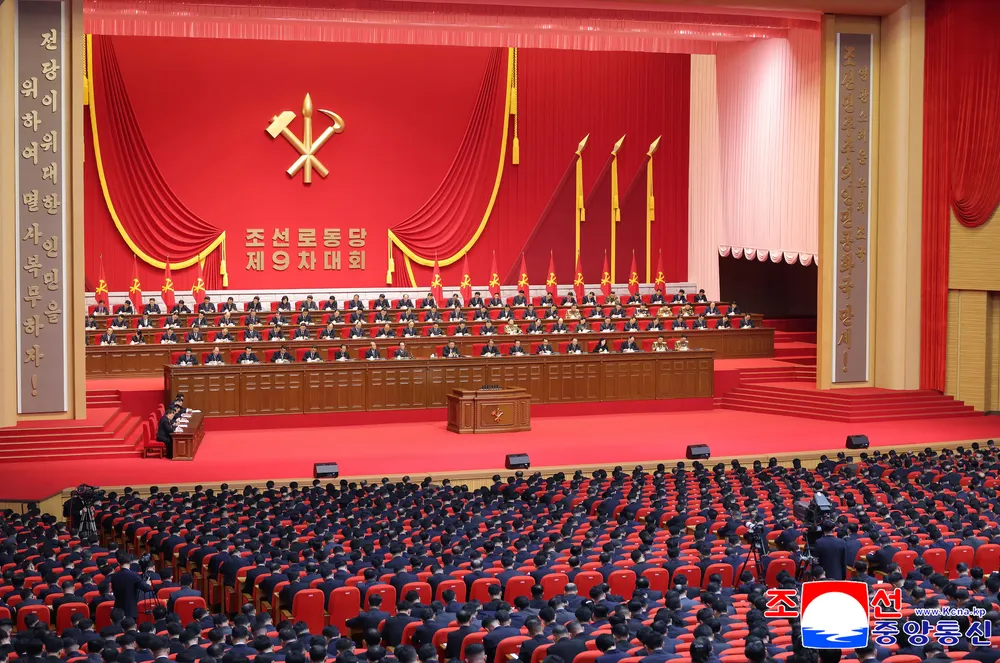
Compared to the 7th Party Congress in 2016 and the 8th Party Congress in 2021, the preparation period for the 9th Party Congress was considerably longer.[1] However, there were no presentations of goals or announcements for subsequent plans in areas such as the economy, military, and construction. Rather, the Party Congress stopped at solely endorsing existing policies.
Nonetheless, North Korea is self-evaluating the 9th Party Congress with the most positive rhetoric. By describing it as a "congress of great victory and glory" that has entered a "new stage of comprehensive socialist development," North Korea emphasizes that it has entered a new stage of revolution completely different from the past 15 years since Kim Jong Un took power.[2] This was self-assessed on the grounds of acknowledging the hardships and adversities in North Korea's domestic and international situation that have worsened threefold over the past five years. Despite these challenges—which previous generations had not experienced—the foundation for qualitative change in revolutionary development was completed by successfully achieving both the "right to survival" and the "right to development" through Kim Jong Un's strong leadership. Therefore, the past five years since the 8th Party Congress have been highlighted as a pioneering period for the environment that enables entry into the stage of comprehensive socialist development—one leading to the "complete victory of our style of socialism" (communism) through innovation and advance.
The problem is that although the 9th Party Congress is said to have entered a new stage of revolutionary development, there are no visions, goals, and plans commensurate with this new stage. The North Korean authorities state that the very stance of innovation and advance announced and pursued during the 8th Party Congress is the strategic stance[3] that enabled the leap to a new stage of revolutionary development. Thus, while North Korea claims to have entered a new stage, the strategic stance for the comprehensive development of the revolution remains stagnated at the 8th Party Congress. As a result, the strategic stances on politics, the economy, the military, inter-Korean affairs, and foreign relations announced through the 9th Party Congress are nothing more than a repetition of the platforms and policies put forward over the past five years since the 8th Party Congress.
Still, claiming that the revolution has entered a comprehensive development stage following the 9th Party Congress, North Korea demonstrated several characteristics distinct from its past version.
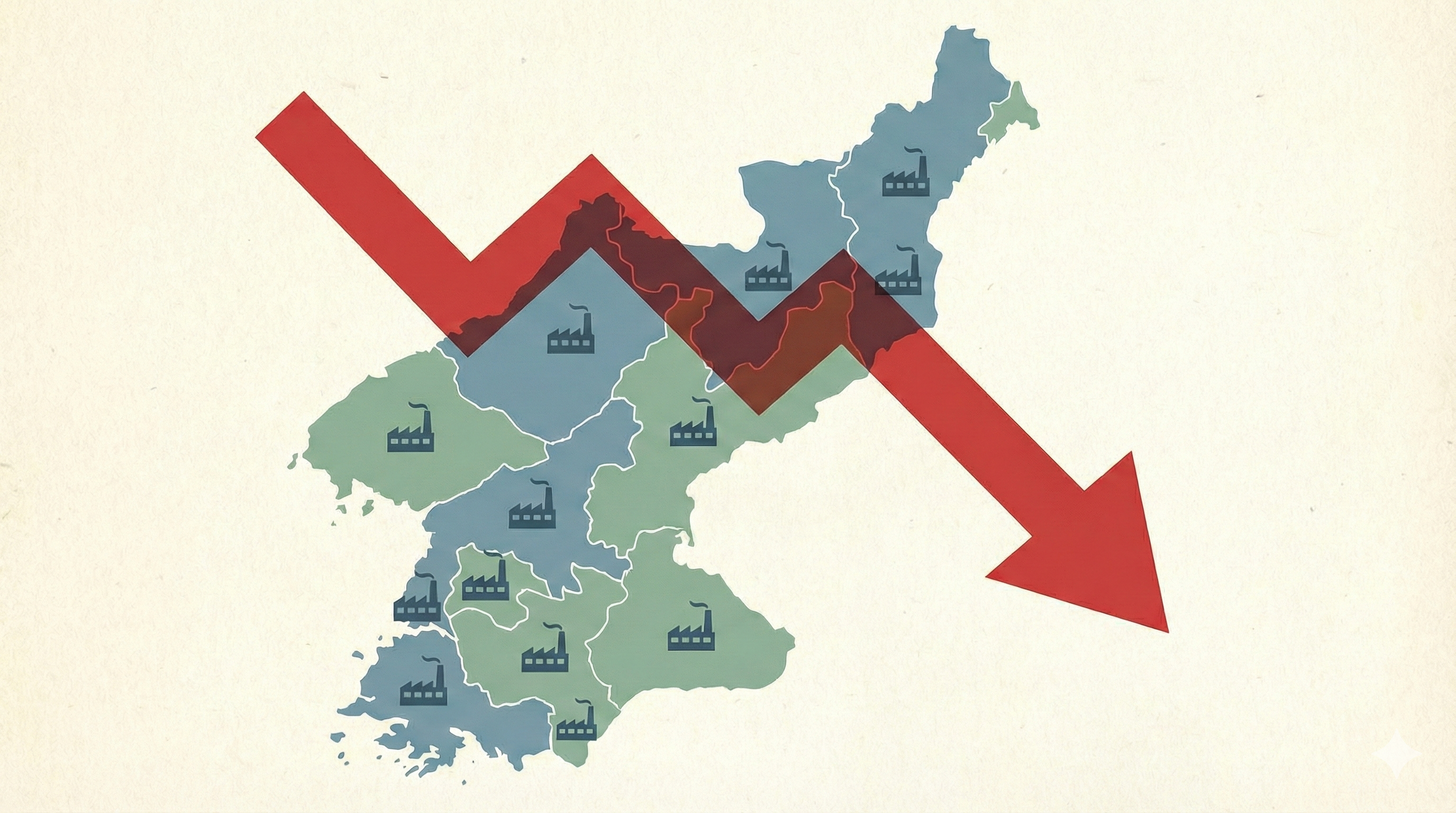
First, North Korean leaders emphasized "consolidation of stability" and "qualitative development" over economic development. They self-assessed that the 8th five-year national economic development plan achieved the most distinct results in the past 30 years by fundamentally fulfilling the 12 major goals of national economic development, and proposed that the future five-year economic development plan would realize targets for each indicator as a stage of consolidating stability and a stage of gradual qualitative development. This time, however, unlike its traditional propaganda statements, North Korea did not disclose specific figures regarding production volume and achievement rates. This change can be seen as an attempt to minimize the political burden of presenting specific economic growth targets, while enduring the limits of economic growth resulting from prolonged sanctions against North Korea due to its adherence to an irreversible nuclear state status. In other words, although the stage of revolutionary development has been elevated, the economy has transitioned into a "system of endurance" rather than growth. Furthermore, by reaffirming the Regional Development 20×10 Policy as a core project, emphasis is placed on balanced development between urban and rural areas rather than growth.
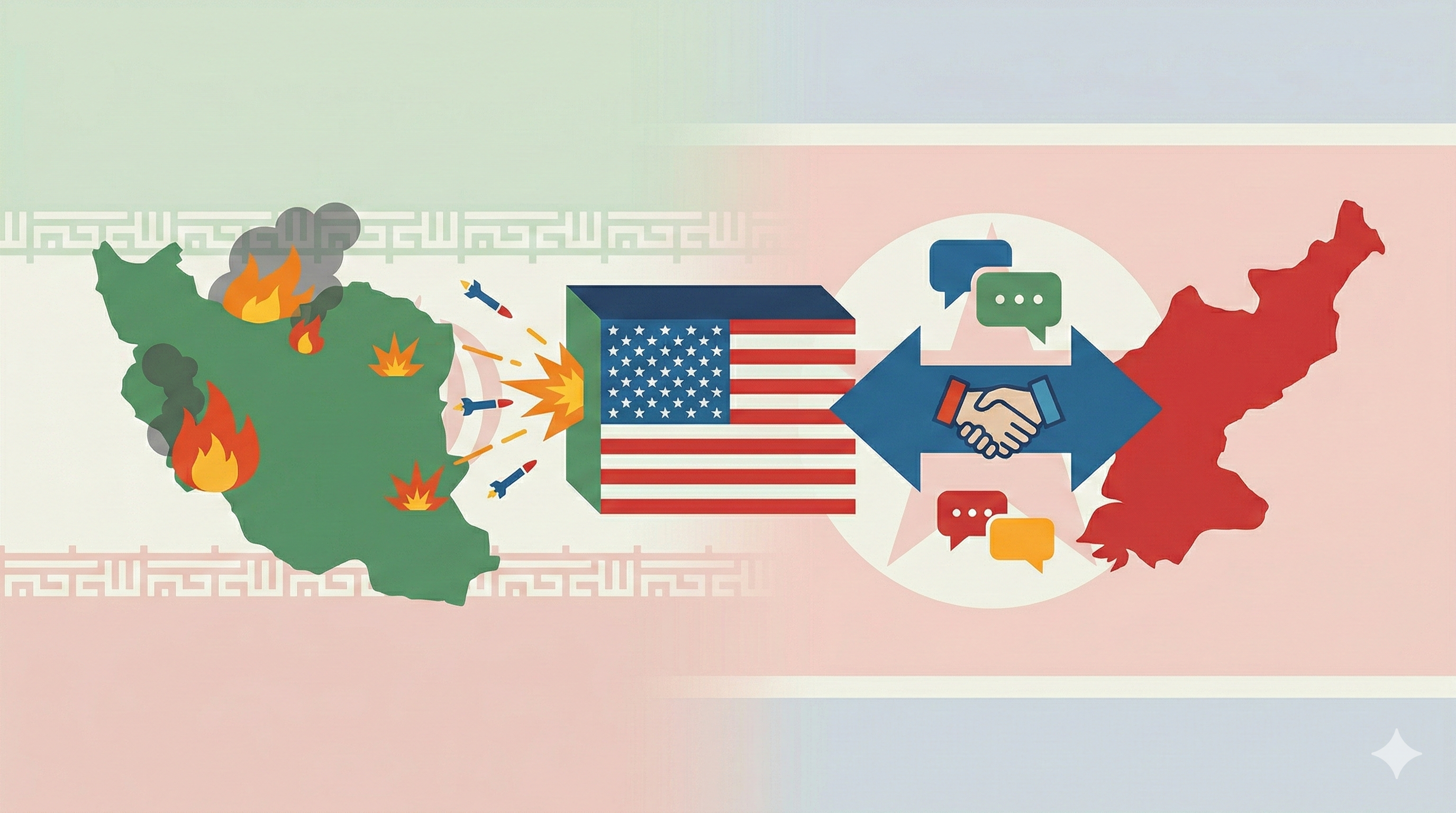
Second, the discourse of national unification has disappeared. From the 1st to the 8th Party Congresses, North Korea maintained a unification strategy and defined inter-Korean relations as an internal national issue. However, at the 9th Party Congress, it declared a final grave decision to put a historic end to the abnormal 80-year inter-Korean relations and established the relationship with South Korea as the most hostile state-to-state relationship. By completely dismantling the structure of dialogue and cooperation, the "national unification discourse" disappeared from the Party Congress for the first time in North Korean history. After declaring a fundamental change in its strategic stance on South Korea policy at the 9th Plenary Meeting of the 8th Central Committee (December 2023), North Korea proceeded with erasing compatriotism and unification, revising the constitution, and abolishing unification-related agencies. Following this, at the 9th Party Congress, North Korean leaders continued with revising the party rules, strengthening the southern border line, reinforcing actual combat readiness against South Korea, and excluding Kim Yong Chol and Ri Son Gwon from alternate membership of the Party Central Committee's Political Bureau. To strengthen its "irreversible nuclear-weapon state status," North Korea is adopting a hostile policy toward South Korea in addition to its hostility toward the U.S., thereby emphasizing that the revolution's comprehensive development stage is a stage of transition to a war preparation system and reinforcement of actual combat readiness.
Third, the function and nature of the Party Congress have changed. While past Party Congress resolutions presented development blueprints and announced plans for each sector, including economic development plans, [4] the 9th Party Congress altered the purpose of the congress to be one of "endorsing" policies already underway. That is, rather than designing or announcing new policies, it transitioned into a venue for system consolidation and internal cohesion through system propaganda. In particular, North Korea focused on maximizing preliminary effects by linking Kim Jong Un's public activities in February with the major achievements of the 9th Party Congress. The Army-Building Day on February 8, the completion ceremony of Saebyol Street for the bereaved families of the martyred veterans of the Russia-Ukraine War on February 15, and the presentation ceremony of the 600mm ultra-precision large-caliber multiple rocket launcher and the groundbreaking ceremony for the 5th stage of construction in the Hwasong area on February 18 were utilized as venues for achieving the leader's task to protect the right to survival and development..Kim Yo Jong's statements on drones on February 12 and February 18 emphasized the strengthening of the southern border line based on the invalidation of the armistice system, framing these actions within the claim of two hostile states. Ultimately, this stance was also reflected in the military parade concluding the 9th Party Congress. As the "first ceremony announcing the departure for a new stage's revolutionary struggle," a military parade of political loyalty oaths centered on weaponless infantry columns was held.
Fourth, the "Five-Point Party Building Line of the New Era" (political building, organizational building, ideological building, disciplinary building, and work style building), first presented by Kim Jong Un in a commemorative lecture at the Central Cadres Training School in October 2022, was adopted as the "Five-Point Party Building Line of the New Era" at the 6th Plenary Meeting of the 8th Central Committee in December 2022, and by codifying it into the party rules as a permanent party building line at the 9th Party Congress, Kim Jong Un's monolithic leadership system of the Party Central Committee was solidified. What should be noted is that the new five-point party building line of the Kim Jong Un era can be seen as the structure for a fourth-generation hereditary succession system and the beginning of a change in the ideological and organizational policy stance to build "Kim Jong Un-ism, " which distinguishes Kim Jong Un from his predecessors. Chronologically, one month after the announcement of the five-point party building platform of the new era, Kim Ju Ae made her first appearance at the launch of the Hwasong-17 ICBM on November 18, 2022, and at the 6th Plenary Meeting in December, the "platform" was elevated to a "line." At the same time, assessing that international relations had transitioned into a new Cold War system, it completely removed the "goodwill-for-goodwill" principle from the existing "tit-for-tat and goodwill-for-goodwill" principle, designated South Korea as an "undoubted enemy," and prioritized a head-on tit-for-tat contest including preemptive nuclear strikes against South Korea and the U.S. This change in stance is similar to the sequence Kim Jong Un followed when he was designated as the successor in 2009; along with idolization efforts, he maximized military tensions against South Korea through the 5th nuclear test (May), the Battle of Daecheong (November), the sinking of the Cheonan in March 2010, and the bombardment of Yeonpyeong Island in July, before officially appearing as the successor by assuming the position of Vice Chairman of the Central Military Commission of the Party in September 2010.
Furthermore, unlike the elite replacements over the past 15 years, the personnel reshuffle through the 9th Party Congress forward-deployed figures for "Kim Jong Un-ism" and the succession of the revolutionary cause—that is, preparation for the successor. Kim Yo Jong was appointed as the Director of the General Affairs Department managing the entire party, and by appointing Foreign Minister Choe Son Hui as the Chief Secretary of the Pyongyang Municipal Party Committee, the highest position among provincial party secretaries, tasks for internal affairs and system management are also being granted for building Kim Ju Ae's succession. Additionally, attention should be paid to the fact that figures who were in charge of surveillance and ideological control moved to key posts. Director of the General Political Bureau Jong Kyong Thaek was appointed as Vice Chairman of the Central Military Commission, and Party Secretary Ri Il Hwan, who presides over propaganda and agitation, and Director of the Party Discipline Department Kim Jae Ryong were appointed as members of the Presidium of the Political Bureau, the highest policy-making body of the Party.
Military Policy Following the Settlement of the "Hostile Two States" System
The problem is how inter-Korean relations in the comprehensive development stage of the revolution were declared at the 9th Party Congress. The strategic shift in North Korea's policy toward South Korea had already begun at the 6th Plenary Meeting of the 8th Central Committee in December 2022. After specifying South Korea as an "undoubtable enemy," at the 9th Plenary Meeting of the 8th Central Committee in December 2023, South Korea was defined as a "hostile state" and a "belligerent relationship," transitioning the stance of inter-Korean relations from a special relationship based on compatriotism to a relationship of two hostile states in a state of war. Since then, it has visualized physical and symbolic severance between North and South Korea by erasing traces of nation and unification, disbanding agencies dealing with South Korean affairs, [5] and blowing up the connecting roads of the Gyeongui and Donghae lines, while expanding military activities such as building walls north of the DMZ Military Demarcation Line, redeploying heavy weapons around guard posts (GPs), expanding mine-laying, constructing new tactical roads, and increasing the input of military personnel. [6] At the 9th Party Congress, relations with South Korea were set solely as a confrontational relationship on a military level, reinforcing border line management with a hostile state and the reinforcement of actual combat response readiness.
Therefore, the strengthening of North Korea's military power presented at the 9th Party Congress focuses on reinforcing the practical operational posture of tactical nuclear weapons and conventional modernization based on the hostile two-state doctrine. In order to build a strong military and maintain the policy of parallel development of nuclear and conventional weapons, North Korea demands the three great revolutions of strong military building: ideological revolution, combat training and educational revolution, and equipment revolution. First of all, North Korea presents the ideological revolution of the People's Army among the three great revolutions as the first strategic task. By thoroughly equipping the People's Army with political and ideological armaments to suit the rapid development of military science and technology, as well as the demands of modern warfare, North Korea emphasizes the military's loyalty to the supreme leader.
Second, the combat training and educational revolutions are closely related to strengthening the practical operational posture of nuclear forces. North Korea stated that it would continue the stance of expanding and strengthening its nuclear armed forces at the 9th Party Congress as well, and that it would promote projects to increase the quantity of nuclear weapons yearly and expand nuclear delivery means and utilization spaces. This suggests that it will advance the multiplexing of nuclear weapon delivery means and multi-domain operations, thereby realizing a "North Korean version of CNI (Conventional-Nuclear Integration)." Through ① strengthening the parallel policy of nuclear and conventional forces, ② actual combat deployment of nuclear combat forces, and ③ nuclear trigger training—that is, exercises for mastering the operation and activation procedures of the integrated nuclear crisis response system, it will seek to reinforce the practical response posture of nuclear combat forces. Accordingly, an increase in the strengthening of North Korean-style CNI exercises is also expected.
Third, the equipment revolution aims to develop conventional weapons to an international level, reflecting the development trend of advanced weapon systems for national defense innovation, multi-domain operations, and future warfare capability building of major advanced countries, particularly including the strengthening of naval power. Regarding the strengthening of naval power, North Korea demanded rapid growth and development of naval operational capabilities based on the nuclear armament of naval surface and underwater forces.[7] Furthermore, the development plans in five areas reportedly included in the five-year national defense development plan—① a more powerful complex of ground- and underwater-launched intercontinental ballistic missiles (ICBMs), ② an artificial intelligence unmanned attack complex, ③ special assets to attack enemy satellites in emergencies, ④ a powerful electronic warfare weapon system to paralyze the enemy's command center, and ⑤ more advanced reconnaissance satellites—reflect the strengthening of North Korea's nuclear readiness posture and the characteristics of modern warfare. In addition, as accelerating the actual combat deployment of already developed new weapons is also presented as an important task, the equipment revolution emphasizes the development of advanced weapon systems and rapid combat deployment.
Meanwhile, while North Korea emphasized the standardization of Juche weapons at the 7th and 8th Party Congresses, it emphasized promoting the standardization of military bases at the 9th Party Congress. It demanded standardization for every military base and required establishing and executing concrete year-by-year plans for the construction of military infrastructure. In particular, it demanded fortifying the "southern border line" within the shortest time possible and reinforcing the guard and firepower systems, which appear to be the top priorities for the Party's military strategic policy.
Based on the hostile two-state doctrine, North Korea is strengthening its offensive capabilities through a speed campaign to fortify the southern border line along with the augmented deployment of main strike means against South Korea, such as 600mm and 240mm multiple rocket launchers and short-range tactical missiles. [8] This trend in North Korea effectively blocks South Korea’s efforts to pursue dialogue and improve inter-Korean relations, and suggests that crisis management on the Korean Peninsula may be shaped by North Korea’s threat perception, as it employs coercion against the South through threats of preemptive strikes and regime collapse.
Implications and Prospects
North Korea’s transition to a stage of comprehensive socialist development through the 9th Party Congress can be seen as consolidating “Kim Jong Un-ism” and establishing a succession structure based on it. This is especially true when considering that the changes in political ideology and strategic stances toward South Korea and foreign countries pursued since the 8th Party Congress have been proceeding in tandem with Kim Jong Un's five-point party-building line of the new era, as well as the start of Kim Ju Ae's accompaniment to Kim Jong Un's public activities. Unusually, during the 9th Party Congress period (February 19-25), North Korea reported daily from February 20 to 27 on the characteristics of the historical watersheds from the 1st Party Congress to the 8th Party Congress. By synthesizing the main characteristics of the 1st to 4th Party Congresses, one can classify this era as a time when sectarian purges were completed and the foundation for the socialist revolution was established. On the other hand, one can emphasize that during the 5th to 6th congresses, the Juche ideology was completed and the formalization of the succession system proceeded. Drawing parallels between the early Congresses (1st through 6th) and those of the Kim Jong Un era (7th, 8th, and 9th), the 7th and 8th Party Congresses can be identified as a period of building the foundation for "Kim Jong Un-ism" through the ideological remolding of party cadres—including the execution of Jang Song Thaek—whereas the 9th Party Congress can be seen as a period of resolving the issues of Kim Jong Un-ism and the succession of the revolutionary cause.
Therefore, the fundamental shift in North Korea's strategy toward South Korea can also be interpreted as part of strengthening ideological alignment within North Korea. This is because North Korea, in the resolution of the 9th Party Congress, emphasized the reinforcement of political and ideological capabilities of the party, government, and military, along with an increase in hostility toward South Korea and measures to strengthen guard duties across the entire southern border line. If the 8th Party Congress approached political and ideological control of non-socialist and anti-socialist behaviors institutionally and legally, the 9th Party Congress virtually transitioned this into strengthening war readiness against enemy threats.
As the fundamental transition of the South Korea policy in 2023 reached a final decision through the 9th Party Congress as an irreversible and hostile relationship, inter-Korean relations are no longer a policy domain where a separate line is established, but merely a hostile state placed within the sub-line of strengthening national defense power. Consequently, the central axis of the policy toward South Korea has shifted to military deterrence, increasing the density and sustainability of "concentrated attacks" against the South via means of strike such as super-large rocket launchers and short-range missiles, as well as strengthening the southern border line.
It seems highly likely that North Korea's policy toward South Korea will proceed with this stance, at least until the formalization of the successor's nomination through the 10th Party Congress. The question is how crisis management will be strengthened during this period.
Arguing that peace and stability can be achieved through balance by force, North Korea is promoting quantitative and qualitative development in reinforcing the practical readiness of nuclear weapons and modernizing conventional forces. On the other hand, South Korea’s North Korea policy emphasizes peaceful measures and dialogue for preemptive tension relief. However, as North Korea self-assesses that it has entered a new stage of revolutionary development, South Korea needs to break away from its existing inter-Korean policy framework. Crisis management is not achieved by preemptive trust-building. Rather, the shortcut to trust-building can begin with strengthening the preparedness for crisis management. Therefore, proposals for dialogue with North Korea must be pursued at the level of strengthening crisis management preparedness, and situation management and response are necessary so that crisis mitigation efforts are not misjudged by North Korea as a wrong signal—namely, an opportunity for coercion against the South. ■
[1] The decision to convene the 9th Party Congress and practical measures were made at the 12th Plenary Meeting of the 8th Central Committee, taking place 8 months prior to the congress. The 8th Party Congress was convened approximately 4 months in advance, and the 7th Party Congress was held for the first time in 36 years but was convened approximately 6 months in advance.
[2] "Report on the 9th Congress of the Workers' Party of Korea," Korean Central News Agency (KCNA), February 26, 2026.
[3] North Korea presented a 'new line of struggle and strategic and tactical policies' as the purpose for holding the 8th Party Congress early. As the background for changing its strategic foundational line, it emphasized the 'threefold hardships' of 1) prolonged sanctions against North Korea due to the lack of progress in North Korea-U.S. relations, 2) the prolongation of COVID-19, and 3) large-scale flood damage. See Korean Central News Agency (KCNA), August 19, 2020.
[4] During the 1st through 6th Party Congresses of the Kim Il Sung era, the post-war three-year plan, the first five-year plan, the seven-year plan, the six-year plan, and the second seven-year plan were announced; during the 7th Party Congress of the Kim Jong Un era, the five-year strategy for national economic development was announced, and at the 8th Party Congress, the new five-year plan for national economic development was announced.
[5] At the Supreme People's Assembly on January 15, 2024, a decision was made to abolish the Committee for the Peaceful Reunification of the Country, the National Economic Cooperation Bureau, and the Mount Kumgang International Tourism Administration of the Democratic People's Republic of Korea. Korean Central News Agency (KCNA), January 16, 2024.
[6] Regarding the increase in North Korea's military activities in the Demilitarized Zone and the bombing of the Gyeongui and Donghae lines, see Munhwa Ilbo, June 15, 2024, and Yonhap News, October 15, 2024.
[7] Kim Jong Un's first military public appearance following the 9th Party Congress was a visit to the new destroyer 'Choe Hyon' on March 3-4, where he demanded the construction of two 5,000-ton new destroyers every year during the five-year plan period and expressed satisfaction with the nuclear armament of the navy, Korean Central News Agency (KCNA), March 5, 2026.
[8] Kim Jong Un showed off that they were for attacking South Korea at the presentation ceremony of the 600mm ultra-precision multiple rocket launchers prior to the 9th Party Congress, and provided field guidance for a firepower strike drill of 12 600mm ultra-precision multiple rocket launchers on March 14 following the 9th Party Congress. Korean Central News Agency (KCNA), March 15, 2026.
■ Ho Ryung LEE is a Senior Research Fellow at the Korea Institute for Defense Analyses (KIDA).
■ Translated and edited by Sangjun LEE, EAI Research Associate; Inhwan OH, EAI Senior Research Fellow; Sowon KIM, EAI Intern
For inquiries: 02 2277 1683 (ext. 211) | leesj@eai.or.kr