Trump's Golden Fleet Initiative, MASGA, and the ICE Pact
- Commentary
- January 22, 2026

- Inhwan OH
- EAI Senior Research Fellow, Lecturer at Seoul National University
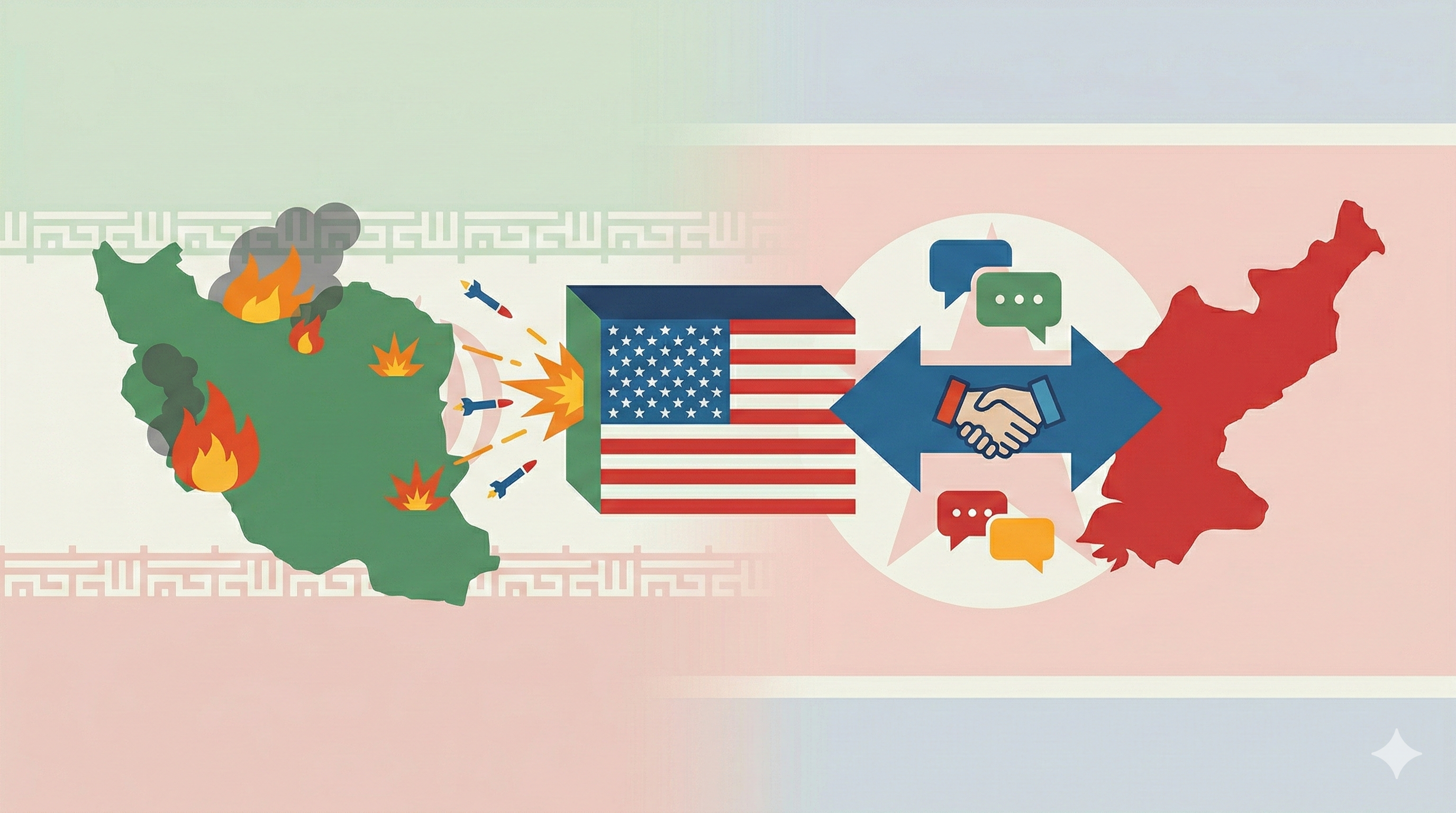
Inhwan Oh, Senior Research Fellow at EAI (Lecturer at Seoul National University), analyzes the strategic realignment of the United States to reinforce its maritime dominance in the Western Hemisphere and the Arctic Ocean amidst the ongoing U.S.-China maritime power transition. The author introduces the Trump administration's large-scale shipbuilding plan, the ‘Golden Fleet’ initiative, and compares the icebreaker cooperation framework, ‘ICE Pact’, with South Korea's ‘MASGA’ initiative, explaining reasons why President Trump issued the presidential waiver for the icebreakers to be built in Finland. Dr. Oh suggests that South Korea should be keen on America's strategic needs in responding to the maritime power transition and build political trust while introducing South Korean nuclear-powered submarines, in order to overcome legal and practical challenges.
■ See Korean Version on EAI Website
1. The U.S.-China Naval Power Transition and the Western Hemisphere
Historically, when a leading sea power faces a naval power transition precipitated by a challenger, it has demonstrated a pattern of redeploying naval forces previously stationed in peripheral theaters and seeking new alliances or realigning existing ones in order to offset those redeployments. For instance, as Britain faced simultaneous naval build-ups by challengers such as the U.S., Germany, and Japan in the late nineteenth and early twentieth centuries, it accepted U.S. claim to a sphere of influence in the Western Hemisphere following the Venezuelan Crisis of 1895, while recalibrating its naval posture in the Western Hemisphere and Asia through the first Anglo-Japanese Alliance in 1902, which strengthened the defense of its European homeland. In this process, Britain adjusted its relationship with France—with whom it had reached the brink of war over Fashoda in 1898—through the Entente Cordiale of 1904 and accepted France as an ally. This was ultimately a strategic adjustment to counter the rise of the German navy in Britain’s homeland.
At the start of the new year, global attention was brought to Venezuela, which had requested U.S. intervention against Britain in the Western Hemisphere, some 130 years ago, as the Trump administration arrested Venezuelan President Maduro. While few anticipated a sudden military operation leading to the arrest of Venezuela’s president, the episode nonetheless demonstrated the Trump administration’s political will to strengthen dominance in the Western Hemisphere—as revealed in the National Security Strategy document released in November 2025—and is indicative of the U.S.’s strategic adjustment amidst the U.S.-China naval power transition. In late October 2025, prior to the release of the National Security Strategy document, the U.S. Department of Defense announced plans to relocate the USS Gerald R. Ford—a state-of-the-art aircraft carrier that had been deployed in the Mediterranean—to Caribbean waters. Although the sudden execution of the military operation against the Maduro regime was not anticipated, media outlets had been reporting that the deployment of the Ford Carrier Strike Group would enable the U.S. to militarily oust Venezuela’s president.
Given that naval power in the Asia-Pacific theater remains critical for the deterrence of the Chinese navy, the strengthening of naval power in the Western Hemisphere implies a relative reduction of naval forces in the European and Middle Eastern theaters. In a similar vein, the fact that the European and Middle Eastern regions were assigned lower priority alongside the African region compared to the Western Hemisphere and Asia-Pacific regions in the 2025 National Security Strategy document can be seen as revealing a strategic reprioritization that is no coincidence. This is because it signifies a situation in which—for the first time in several decades—U.S. aircraft carriers are not deployed within the Central Command, which covers the West Asian theater, and European Command. In December of last year, about two months after reports of the Department of Defense’s plan to deploy a carrier strike group, Army special forces, and Marines to the Caribbean, President Trump announced the Golden Fleet initiative, demonstrating a willingness to minimize the quantitative inferiority in the naval competition with China, following the Maritime Action Plan.
2. Trump’s Golden Fleet Initiative
While the U.S. Department of Defense and the Congressional Research Service estimated in 2024 that the Chinese navy possessed approximately 370 combat ships and would possess 395 by 2025, the number of U.S. Navy combat ships is estimated to remain at approximately 293 as of October 2025. Although U.S. Navy combat ships maintain superiority over those of the Chinese navy in terms of operational experience, displacement, and firepower, it is already widely accepted that the gap in the number of naval combat ships between the two countries will inevitably widen further over the next five years until 2030. In response, the Maritime Action Plan announced in April last year mandated the submission of interagency collaboration plans among all relevant departments that can be mobilized at the administration level by November, signaling an intention to rebuild the foundations of the U.S. maritime industry, naval power, and shipbuilding sector as a whole. Furthermore, the Golden Fleet initiative announced on December 22 outlines the specific fleet architecture the Trump administration envisions for the future U.S. Navy.
Assessing that the Navy’s warship construction plan—which had focused on smaller and newer warships until recently—does not align with the Trump administration’s strategic direction, President Trump announced the construction plan for the Golden Fleet, calling for 20 to 25 next-generation destroyers with displacements of 30,000 to 40,000 tons and an even larger number of new frigates. Considering that the displacement of the Arleigh Burke-class destroyer—which is currently the main destroyer of the U.S. Navy—is approximately 9,500 tons, these next-generation destroyers will be even larger than any battleships the U.S. Navy has possessed over the past 80 years, excluding aircraft carriers. This new Trump-class battleship—which the U.S. aims to field in numbers of 20 to 25 of, starting with an initial two vessels— appears likely to be equipped with next-generation weaponry such as electromagnetic railguns and directed energy lasers, as well as cruise missiles, hypersonic missiles, and long-range missiles.
Although media reports in late October of last year suggested that the White House and the Department of Defense were discussing the construction of next-generation warships in the 15,000 to 20,000-ton class, plans have since emerged for even larger and more powerful combat ships to serve as the capital ships of the Golden Fleet. President Trump signed the National Defense Authorization Act (NDAA) for the 2026 fiscal year, which reflects a budget of approximately $26 billion for the construction of new warships. In an announcement on December 22, he revealed an ambitious objective, claiming that the new warships would be over 100 times as powerful as the existing Iowa-class battleships. However, given the lack of clarity surrounding follow-up measures for the Maritime Action Plan, even after the November deadline last year, as well as the resignation of senior officials within the administration, it remains uncertain whether the Golden Fleet initiative can proceed as planned. There is an ongoing debate among experts regarding the feasibility of the initiative in terms of cost, consistency between ship type and operational concepts, shipbuilding supply-chain capabilities, and legal constraints under the Jones Act and the Burns-Tollefson Act.
3. Progress and Challenges of the MASGA Project
Trump's Golden Fleet initiative includes new frigates and numerous unmanned autonomous vessels in addition to large new battleships like the Trump-class. From a favorable analytical perspective, the Golden Fleet initiative can be understood as enabling a variant of a hedging strategy in which large next-generation combat ships function as a form of arsenal ship—a concept explored by the U.S. Navy in the 1990s but never realized due to congressional budget rejection—serving as rear-echelon fire support platforms. At the same time, enemy attrition would be maximized through coordinated swarming operations by small frigates, numerous unmanned vessels, submarines, and drones operating in the forward area. On the other hand, skeptics of the Golden Fleet initiative question whether the utility of large combat ships in the 30,000–40,000-ton class is sufficient to justify the astronomical costs involved, particularly when compared to existing combat ships. They cite excessive cost escalation, constraints on construction feasibility, and the fact that decisive naval battles between large surface combatants are no longer central to modern maritime warfare.
While it is currently difficult to assess the feasibility and cost-effectiveness of the Golden Fleet initiative, it can nonetheless be seen as a favorable factor for South Korea, which seeks to revitalize the MASGA project. South Korea has undertaken the maintenance, repair, and overhaul (MRO) of U.S. auxiliary ships several times up to this point. Yet, on October 26 last year, at the Gyeongju APEC, HD Hyundai signed a ‘Memorandum of Agreement on Cooperation in Merchant Ship and Warship Design and Construction’ with Huntington Ingalls, the largest U.S. defense shipbuilder, thereby becoming the first South Korean shipbuilder trying to undertake the construction of U.S. naval vessels. The U.S. Navy plans to begin construction in August 2027 following the completion of the design stage and selection of a final operator. With President Trump announcing under the Golden Fleet initiative that cooperation would take place with South Korean companies such as Hanwha- which owns the Philadelphia Shipyard- in the construction of new frigates for the U.S. Navy, an opportunity has emerged for the MASGA project to expand into the construction of auxiliary ships and combat ships.
Starting with the order for twelve merchant ships currently held at the Philadelphia Shipyard, if South Korea's shipbuilding capabilities are utilized for the construction of U.S. auxiliary ships and combat ships, such as frigates, the area in which the MASGA project can contribute to the realization of the Golden Fleet initiative can be expanded. The MASGA project, which is being promoted between Korean companies, the U.S. administration, and the Navy, is arguably making meaningful progress. However, conceivably, the practical challenges facing the South Korean shipbuilding industry are by no means smaller than the extent of progress of the MASGA project that the Golden Fleet initiative may bring. First, it remains unclear whether the Philadelphia Shipyard—which has focused on merchant ship construction to date and lacks experience in warship production—can successfully secure the capability to build new frigates within the planned timeframe.
Specifically, experts believe that the high labor costs in the U.S., the shortage of skilled labor for warship manufacturing, high-cost component supply chains, and the Buy American Act— which stipulates that 60–75% of the components for federal government products must be U.S.-made—will disadvantage South Korean companies within the U.S. For example, radars, sensors, weapons, and engines are manufactured by different companies, yet the operation of supply chains within the U.S.—which worsened following the pandemic—remains difficult. By contrast, the competitiveness of South Korea’s shipbuilding industry lies in its ability to supply high-quality steel, engines, and parts at relatively lower cost, whereas U.S.-produced steel, engines, and radars are more expensive and slower to procure. Furthermore, South Korea's wage level remains at about 60% of that of the U.S., and, critically, many workers at the Philadelphia Shipyard are likely to be unfamiliar with the design requirements and components of new frigates.
South Korean companies such as Hanwha, which entered the U.S. to avoid restrictions under the Jones Act and the Burns-Tollefson Act, are likely to encounter the Buy American Act once again. In doing so, they will again face various warship component supply chain and labor force challenges that would not have been major issues had construction taken place in South Korea. As the U.S. manufacturing supply chain has further deteriorated since the pandemic, whether the construction of auxiliary ships or warships at U.S. shipyards can proceed in an improved manner will depend on whether Hanwha can sufficiently address the shipbuilding supply chain issues and overcome legal constraints. Taken together, although the situation involves entrusting construction to Hanwha's Philadelphia Shipyard from the outset due to the need to quickly build new frigates, no one can guarantee whether the construction will proceed as swiftly as desired by the Trump administration.
4. Presidential Waiver Bypassing Domestic Law: Implications of ICE Pact and Finnish Case
Like Hanwha, HD Hyundai has also expressed its willingness to support the MASGA project by mobilizing various options- including the acquisition of local shipyards in the U.S- that can evade the regulations of the Jones Act and the Burns-Tollefson Act. Yet, as seen in the case of Hanwha, which preceded HD Hyundai in shipyard acquisition, the challenges within the U.S. market are formidable. On the other hand, in order to expand influence in the Western Hemisphere and increase control over Arctic routes amidst the U.S.-China naval power transition, the Trump administration upheld the Icebreakers Cooperation Effort Pact (ICE Pact) signed by the Biden administration with Canada and Finland in July 2024, and invoked the presidential waiver in October 2025 by defining the construction of U.S. Coast Guard Arctic icebreakers in Finland as a critical national security interest. Of a total of 11 Arctic Security Cutters, 4 were permitted to be built at two shipyards in Finland while the remaining 7 were planned to be built at shipyards within the U.S.
Following the summit between President Trump and President Alexander Stubb of Finland in October of last year, President Trump's Memorandum and a fact sheet containing the key details regarding the ICE Pact icebreaker construction plan were released on the 8th and 9th. Although the presidential waiver to bypass the Burns-Tollefson Act had been legally stipulated, it was difficult to find a historical precedent where it was actually invoked. Therefore, considering that the general interpretation was that situations which could be defined as national security interests by the President could be very limited, such as in times of war, the implications of the presidential waiver exercised for Finland last year merit further analysis. Reasons for the presidential waiver being granted to Finland includes the fact that while China is already operating five icebreakers in the Arctic region, the number of icebreakers currently operable by the U.S. is merely two.
Even among the two icebreakers possessed by the U.S., one is an aging vessel commissioned in 1976, while the other is a vessel converted from a merchant ship by the U.S. Coast Guard in September of last year. In light of the internal assessment that the U.S. Coast Guard requires at least nine icebreakers to operate year-round in support of U.S. security interests in the Arctic region, the administration judged that the construction of icebreakers overseas is necessary to restore U.S. position in Arctic waters—including around Greenland—within a short period of time. Also, as specified in the fact sheet, the intention is to offset the disadvantage in the number of icebreakers against China and Russia—at least temporarily—while the Coast Guard rebuilds the domestic supply-chain base for icebreaker manufacturing. In the short term, overseas construction is expected to promote investment in the U.S. shipbuilding industrial base.
At a strategic level, it is necessary to take into account the fact that the U.S. was simultaneously pushing for the expansion of MASGA and icebreaker construction cooperation with Canada and Finland under the ICE Pact from October of last year. Ultimately, as mentioned above, it appears that the U.S. felt a short-term necessity to build more icebreakers than China, if only to preferentially strengthen the U.S. position in the Western Hemisphere, in case of a situation where the U.S.-China naval power transition cannot be easily reversed. In the case of Russia, given that it has long operated the world's largest icebreaker fleet—more than 50 vessels, including 8 nuclear-powered icebreakers—it represents a strategic constant rather than a variable. Therefore, since invoking the presidential waiver can improve the speed of icebreaker construction within a short period, its use in the case of Finland can largely be seen as a response to the expansion of China's icebreakers and maritime influence within the Western Hemisphere, with icebreakers built in Finland expected to be manufactured by early 2028.
Of course, follow-up measures for the ICE Pact decided at the ministerial meeting in November of last year also include plans for U.S. maritime sector workers to engage in knowledge sharing at Finnish shipyards through U.S.-sponsored international shipbuilding fellowships, as well as longer-term plans to transition to manufacturing icebreakers in the U.S., as exemplified by Canadian shipbuilder Davie’s planned investment of $1 billion to acquire and modernize a shipyard in Texas. However, in the case of MASGA and the Golden Fleet plan—which encompass merchant ships, auxiliary and combat ships, including new frigates and pursue the long-term reconstruction of the U.S. shipbuilding industry’s infrastructure and supply chain—the need to invoke a waiver to rapidly produce several vessels within two years does not appear pressing at this stage. If the U.S.-China naval power transition unfolds at a more threatening level than expected over the next few years, the invocation of a waiver could be considered. In the meantime, devising manufacturing methods that can bypass domestic legal constraints or promote MASGA through sustained lobbying of Congress and the administration remains the realistic option.
5. MASGA and Nuclear-Powered Submarine Projects Surrounding the Korean Peninsula
On December 25 of last year, a few days after the Golden Fleet initiative was announced in the U.S., North Korea publicly unveiled the full exterior of the ‘nuclear-powered strategic missile submarine’ that it had announced was under construction. On March 8 of the same year, North Korea publicized photos of Kim Jong Un’s on-site guidance of the ship construction project and the lower section of the nuclear-powered strategic missile submarine through the Rodong Sinmun. However, the submarine’s full exterior was made public for the first time on this occasion. The Rodong Sinmun claimed that the displacement of this submarine is 8,700 tons; moreover, the use of the term ‘strategic missile’ suggests that it is likely equipped with submarine-launched ballistic missiles (SLBM) or submarine-launched cruise missiles (SLCM) carrying nuclear warheads.
During an on-site inspection of the construction project, North Korean leader Kim Jong Un criticized consultations on South Korea–U.S. nuclear-powered submarine construction proposed by President Lee Jae Myung and approved by President Trump. Chairman Kim Jong Un referred to South Korea’s nuclear-powered submarine construction plan as having been “agreed upon with Washington at Seoul’s request,” defining it as an “aggressive act that seriously infringes upon” North Korea’s “safety and maritime sovereignty,” and characterized it as a “security threat that must be responded to.” Subsequently, although the South Korean government has issued several clarifications stating that the nuclear-powered submarines are to be built domestically, President Trump announced on social media following the South Korea-U.S. summit during the APEC period that South Korea's nuclear-powered submarines would be built at the Philadelphia Shipyard. In this context, it is highly likely that the MASGA project will be linked in the long term to deeper security and technology cooperation between South Korea and the U.S., extending beyond the shipbuilding sector.
Behind the invocation of the presidential waiver during the ICE Pact icebreaker construction process, as well as the U.S. government’s proactive approval of South Korea's nuclear-powered submarine construction plan, lies the shifting structural dynamics of the naval strategic environment of the Asia-Pacific and the Western Hemisphere. This underscores the need for South Korea to cultivate political trust with the United States over the long term, in alignment with the trajectory of the U.S.–China naval power transition, as it pursues the MASGA project and the nuclear-powered submarine program. This is because a long-term perspective that accurately assesses strategic needs of the counterpart, along with political trust built through cooperation, can become an important foothold for overcoming technical constraints and various legal obstacles. ■
References
Cancian, Mark F. 2025. “The Golden Fleet’s Battleship Will Never Sail.” CSIS. December 23. https://www.csis.org/analysis/golden-fleets-battleship-will-never-sail.
Holliday, Shelby and Lara Seligman. 2025. “Pentagon Orders Aircraft Carrier to the Caribbean.” The Wall Street Journal. October 24. https://www.wsj.com/world/americas/pentagon-orders-aircraft-carrier-to-the-caribbean-545e3893. (Accessed: January 15, 2026)
Humpert, Malte. 2025. “US, Canada, and Finland Double Down on Joint Icebreaker Effort in DC Meeting.” High North News. November 21. https://www.highnorthnews.com/en/us-canada-and-finland-double-down-joint-icebreaker-effort-dc-meeting. (Accessed: January 15, 2026)
Jensen, Benjamin. 2026. “Why the Golden Fleet Will Sail.” CSIS. January 9. https://www.csis.org/analysis/why-golden-fleet-will-sail.
Kim, Ji-won. 2025. “Trump Administration Unveils ‘Golden Fleet’ to Counter China’s Naval Expansion.” The Chosun Daily. October 27. https://www.chosun.com/english/world-en/2025/10/25/KJ2BYUFJVNCBDFXPAVWHSZVG5I/. (Accessed: January 15, 2026)
Lariosa, Aaron-Matthew. 2025. “Trump Inks Deal for American and Finnish Yards to Deliver First Arctic Security Cutters by 2028.” USNI News. October 9. https://news.usni.org/2025/10/09/trumps-inks-deal-for-american-and-finnish-yards-to-deliver-first-arctic-security-cutters-by-2028. (Accessed: January 15, 2026)
LaRocco, Lori Ann. 2025. “Trump Wants the U.S. Shipbuilding Industry to Be Great Again. Here’s What It Will Take, and What’s at Stake.” CNBC. December 14. https://www.cnbc.com/2025/12/14/trump-america-shipbuilding-china-competition.html. (Accessed: January 15, 2026)
Malone, Kelly Geraldine. 2025. “Canada, U.S., Finland Reaffirm Icebreaker Pact as Trade Talks Remain Frozen.” Global News. November 18. https://globalnews.ca/news/11531078/canada-us-finland-ice-pact-icebreakers-arctic/. (Accessed: January 15, 2026)
O’Rourke, Ronald. 2025. “Navy DDG(X) Next-Generation Destroyer Program: Background and Issues for Congress.” Congressional Research Service. January 16. https://www.congress.gov/crs-product/IF11679.
────. 2025. “China Naval Modernization: Implications for U.S. Navy Capabilities—Background and Issues for Congress.” Congressional Research Service. April 24. https://www.congress.gov/crs-product/RL33153.
────. 2026. “Navy Force Structure and Shipbuilding Plans: Background and Issues for Congress.” Congressional Research Service. January 20. https://www.congress.gov/crs-product/RL32665
Park, Kook-hee. 2026. “Trump’s Fleet, Hanwha Face U.S. Expert Doubts.” The Chosun Daily. January 12. https://www.chosun.com/english/world-en/2026/01/12/N7N4BEMEUZFEJP6IOMKXXSM7QU/. (Accessed: January 15, 2026)
Rybski, Peter. 2026. “Forget the Hype: Here Are the Facts about Last Week’s US-Finland Icebreaker Deal.” Arctic Today. October 13. https://www.arctictoday.com/forget-the-hype-here-are-the-facts-about-last-weeks-us-finland-icebreaker-deal/. (Accessed: January 15, 2026)
Seligman, Lara and Alexander Ward. 2025. “Trump Pushes for New Classes of Navy Warships.” The Wall Street Journal. October 24. https://www.wsj.com/politics/national-security/trump-pushes-for-new-classes-of-navy-warships-0fe217b9. (Accessed: January 15, 2026)
The White House. 2025. “Construction of Arctic Security Cutters.” October 8. https://www.whitehouse.gov/presidential-actions/2025/10/construction-of-arctic-security-cutters/
────. 2025. “Fact Sheet: President Donald J. Trump Authorizes Construction of Arctic Security Cutters.” October 9. https://www.whitehouse.gov/fact-sheets/2025/10/fact-sheet-president-donald-j-trump-authorizes-construction-of-arctic-security-cutters/
U.S. Department of Defense. 2025. Military and Security Developments Involving the People’s Republic of China 2024. December 18. https://media.defense.gov/2024/Dec/18/2003615520/-1/-1/0/MILITARY-AND-SECURITY-DEVELOPMENTS-INVOLVING-THE-PEOPLES-REPUBLIC-OF-CHINA-2024.PDF
────. 2026. Annual Report to Congress: Military and Security Developments Involving the People’s Republic of China 2025. December 23. https://media.defense.gov/2025/Dec/23/2003849070/-1/-1/1/ANNUAL-REPORT-TO-CONGRESS-MILITARY-AND-SECURITY-DEVELOPMENTS-INVOLVING-THE-PEOPLES-REPUBLIC-OF-CHINA-2025.PDF
김은중. 2025. “美 USTR대표 ‘2025년은 관세의 해, 필리 조선소 50년 만에 일감’.” 「조선일보」 12월 23일. https://www.chosun.com/international/us/2025/12/23/PEZHHF2SMJBSFASI6KW4K2AQXE/ . (검색일: 2026. 1. 15.)
김은중. 2025. “‘트럼프 마스가 닻’을 올리다… ‘한국과 협력, 황금 함대 건조’.” 「조선일보」 12월 23일. https://www.chosun.com/international/us/2025/12/23/FREOO3DQY5CJ5FDITPQ325FV6A/ . (검색일: 2026. 1. 15.)
반길주. 2025. “한미동맹과 조선협력: K-조선의 대미 레버리지 순기능 추적.” 『신아세아』 32, 1: 5-32.
이소영. 2025. “미 함정 시장으로의 효과적 진출을 위한 미국의 함정 건조 및 MRO 관련법 분석.” 『한국방위산업학회지』 32, 1: 49-61.
정영교·윤지원·심석용. 2025. “김정은, 성탄절에 8700t급 핵잠 공개… 韓 핵잠 건조는 공격적 행위.” 「중앙일보」 12월 25일. https://www.joongang.co.kr/article/25392815. (검색일: 2026. 1. 15.)
정한국. 2025. “HD현대, 한국 첫 美군함 건조 도전.” 「조선일보」 10월 27일. https://www.chosun.com/economy/industry-company/2025/10/27/CMTNYATFSVBI5HNWKNQDCZY4AY/. (검색일: 2026. 1. 15.)
최지영. 2025. “HD현대 ‘미국 군함 건조 동참’ · 한화 ‘전방위 방산 세일즈’… ‘마스가’ 확대 전력투구.” 「문화일보」 10월 27일. https://www.munhwa.com/article/11542237. (검색일: 2026. 1. 15.)
한예나. 2025. “한화, 오스탈 지분 19.9% 확보… 1대 주주 된다.” 「조선일보」 12월 12일. https://www.chosun.com/economy/industry-company/2025/12/12/4USAZEULDZCHJJCY6X2PZQJJNA/. (검색일: 2026. 1. 15.)
홍민. 2025. “북한의 핵동력전략유도탄잠수함 공개 분석.” 『온라인시리즈』. 통일연구원.
■ Inhwan OH is a Senior Research Fellow at the EAI; a Lecturer in the Department of Political Science and International Relations at Seoul National University.
■ Edited by Sangjun LEE, EAI Research Associate; Justin Chiyoon Chung, EAI Intern.
For inquiries: 02 2277 1683 (ext. 211) | leesj@eai.or.kr