From "Our Country" to "My Country"
- Commentary
- December 24, 2025

- Seunghee HA
- Research Professor, Institute for the North Korean Studies, Dongguk University
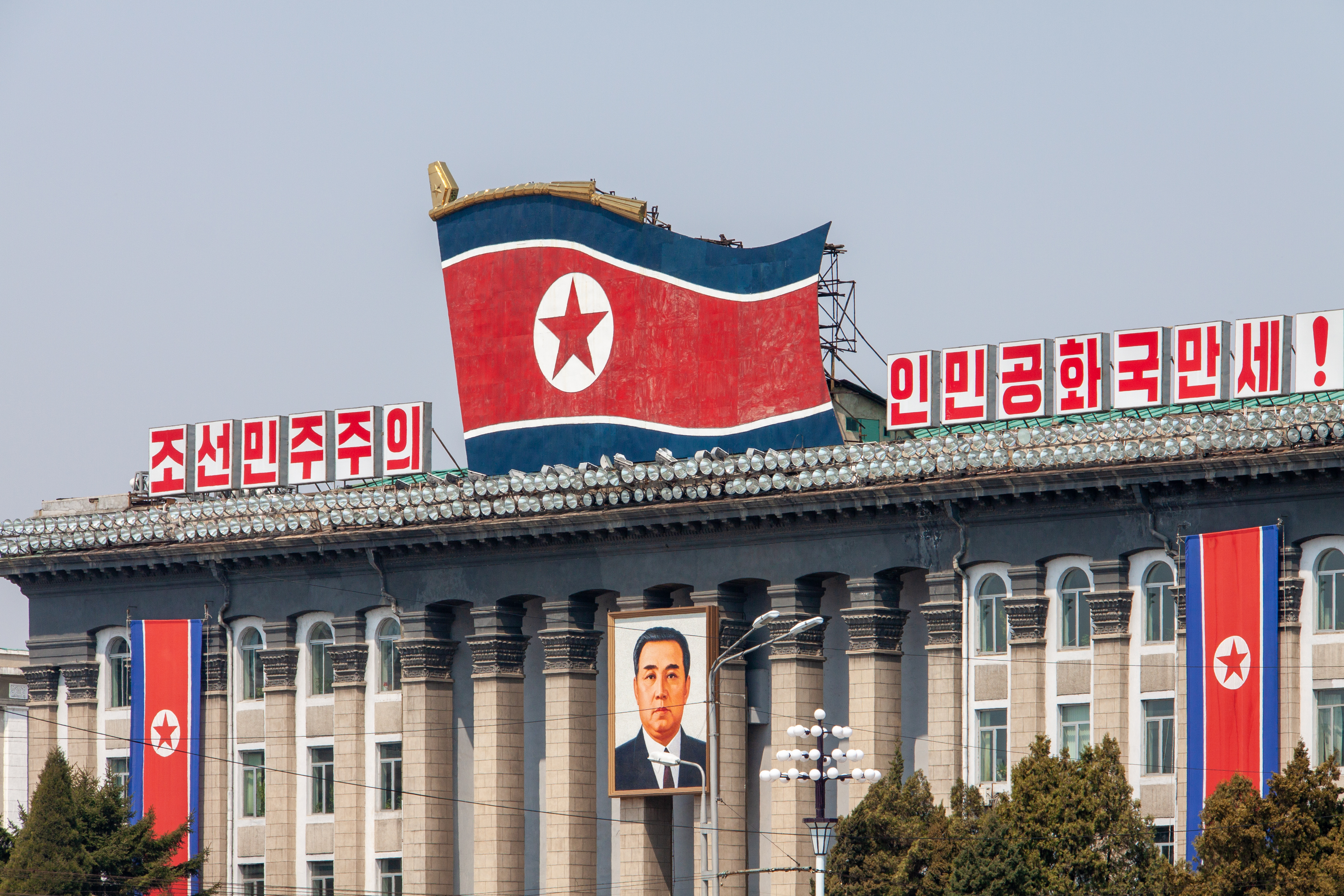
Seunghee Ha, Professor at Dongguk University, has analyzed that the lyrics of recent North Korean songs have shifted from 'our country' to 'my country'. She interprets this as a result of a change in strategy by the North Korean authorities, who now appeal to individuals' emotions rather than to their sense of loyalty through collective slogans. However, Professor Ha suggests that this strategy indirectly reinforces the political system and cult of personality by encouraging personal love for the country.
■ See Korean Version on EAI Website
The "Country" is back
North Korea's New Year's celebration performance, held every year to celebrate the New Year, is a stage where new songs created by the authorities are officially released. The new song released at the performance is an indicator of how much the North Korean art industry accepts international music trends, and through lyrics and forms, the North Korean authorities can deliver policy messages they want to convey to the people. New creative songs were also released at the 2025 New Year's celebration, especially noteworthy were these four songs: "Love Road," "We Are Koreans," "Strong Mother, My Country," and "My Country and My Destiny."
In North Korea, new songs do not stop at the stage of performances. Creative songs are immediately published in the form of sheet music in major media outlets such as the Rodong Sinmun and Democratic Chosun, and are repeatedly transmitted to the screen music of the Korean Central Broadcasting System. Over time, it will be incorporated into the performance repertoire of major bands, and will be repeatedly learned from residents through the exclusive association. The emergence of a new song in North Korea is part of its propaganda and instigation process to disseminate political messages in North Korean society.
What the new songs released this year have in common is that the term "country" appears as a core emotion and theme. It is not that there was a creative song that put the country to the forefront before. However, it is worth noting that song titles including 'country' have been confirmed only twice in 2013 and 2024. In 2013, three songs were released one after the other: "Song overflowing with my country's mountains," "My country with hope," and "Country's hymn," and the word "Country" was unusually emphasized, and 11 years later, from 2024 to 2025, "Country" came to the fore again. It is hard to see this repetition as a mere coincidence.
In North Korea, the 'state' is defined as a power institution that realizes political domination of a specific class and an institutional device that uniformly organizes and manages the activities of all residents, so it has a clear character as a substantive power responsible for social management. On the other hand, the 'country' includes the general meaning of 'the country where one grew up' and 'the country where the nationality belongs' as well as the rule of 'the country of the people provided by the head of state'.[1] The core of the definition of the North Korean concept is that the word "country" is not an institutional category but is connected to the leader-led political origin.
In this way, if the 'state' is the language of institutions and power, 'country' functions as a more symbolic and emotional expression with political origin. The fact that the authorities have begun to choose "country" again as the title of the song can be interpreted as an intentional choice to utilize the symbolism of this concept. This shows that the approach of symbolic and emotional language, not institutional language, is re-emerging in propaganda strategies.
2013 'Collective' homeland: leader-centered mobilization of loyalty
On the surface, the 'country' titles created in 2013 take the form of singing the motherland, but in reality, they are focused on strengthening loyalty to Kim Jong-un and the leadership-centered collective solidarity. The title "country" is only a package, and in the lyrics, the motherland is reconstructed as a symbolic basis that contains the existence and achievements of the leader.
In the song "Song overflowing with the mountain of my country," the word ‘country’ appears only in the lyrics of the first verse: "The song of the enemy resonating with the mountain of my country, which is hopeful." Here, the country is defined not as a geographical space or a national community, but as a place where Kim Jong-un's songs resonate. This is the point where it is possible to interpret that the motherland is the space where the leader's thoughts spread. Short and repetitive phrases such as "Leader Kim Jong-un's Song" and "Song Song Song" repeated in the chorus make the group chorus easy, heighten emotions, and eventually act as a musical device that enforces collectivist loyalty.
It resonates in the mountains of my country, which is full of hope. The leader's song is dedicated to the people. Thank you for the love you give to the people. The song of the admiration is overflowing with the song song song of admiration. Oh, our leader Kim Jong Un's song
The "Praise of the Country" describes the country more lyrically. Expressions such as "a loving mother's affectionate hometown" present the country as an emotional haven and evoke personal memories and emotions. However, it is not an emotional description that governs the entire flow of the song, but expressions such as "the country of the people, overflowing with happiness," and "the country of his precious arms." These sentences idealize the country as a maternal being, and at the same time function as a device by which the state sets and regulates the standards of emotion and happiness. Exaggerated images such as "paintingly ecstatic land and sea" and "a legendary country full of gold and silver treasures" also emphasize the permanence and superiority of the system through ideals far from reality. Repetition of national symbols such as Chamae[2] and Mokran flowers is also a rhetoric to instill a feeling of pride and loyalty in residents.
My beloved mother gave me my first step, a loving home, a country, whose precious arms are as ecstatic as a painting of my country, and the land of blinding eyes and the land of legend full of gold and silver treasures. Happiness overflows. In the cloud of the people's country, this mountain, which flies and blooms, is a wise and beautiful Joseon. No envy of the country of the morning
Among the three songs, "My Hopeful Country" most explicitly equates the country with the leader. The chorus reduces the identity of the country to the "arm of the leader" through the expression "The hopeful country is the leader's arms." Lyrics such as verse 1 "Enjoying the Bright Morning" and verse 2 "During Rain and Fierce Storm" replace the isolation caused by real hardships and international sanctions with metaphorical trials, suggesting the way to overcome them as loyalty to the leader. First-person multiple subjects such as "we all" and "where we live" reorganize individual emotions into collective emotions, and "my country" at the end of the lyrics seems like a personal exclamation, but this is only a rhetorical device that represents collective emotions.
We are all filled with joy, and we are happily in a brilliant morning. The dream that we hope for blooms in front of our eyes is also happily in a way. Bright and bright, bright. The arms of our leader, where we live, my country, people’s hope, full of hope
All three songs related to "country" created in 2013 refer to the country in the title, but in the lyrics, praise of achievements and achievements along with Kim Jong-un's real name or title is centered, and the country is subordinated as a space that justifies the leader's authority. Even a song depicting the country as an utopia implicitly places the leader as the subject of protecting and realizing the utopia. The 'country' of this period is the 'country of groups' to the end, and the group can be seen as one united around the leader. Songs in 2013 with 'country' in their titles all function as a collective loyalty mobilization song that sets up a leader as an absolute subject that enables that hope while advocating the brightness and hope of the future.
The country of the 'individual' in 2024: the strategy of internalizing emotions
Songs on the 'country' released in 2024 completely changed the propaganda strategy to place 'my country' in individual emotions rather than group slogans. All of these songs are composed of intimate objects linked to memories, nostalgia, and the meaning of life, using the inner monologue of the first-person speaker as the central narrative. In particular, lyrics to "Song to the Country" begins with the language of voluntary confession of "Are you going to sing?" and redefines the motherland as an emotional space that reminds you of various scenes of one’s life, not an object of absolute loyalty. Through the expression "what to sing first" and "how to sing", the sincerity toward the country is emphasized as a saturated state of emotion. The country in the lyrics is not a 'leader', but a memory, not an institutional 'state', but an object of retrospect. Through the repeated "I love you" in the chorus, the feeling of love is projected on the object of the country from the first person perspective, and by personalizing the ideological object from the expression "I can't live for a moment without you" to "you," it transforms the country into an emotional being that can form relationships rather than abstract ones.
Singing about my country reminds me of many images and memories. What should I sing first? I love everything that is so warm and precious. I sing because I cannot live for a single moment without my country. The most beautiful and great country in the world
There are still many mountains to overcome, but you know the fate of my future. You don't know that my life with my country can't be different. You shine. I'm happy. One inescapable fate. I'll be with you until the end, my country
<"Strong Mother My Country"> maximizes emotional intimacy by calling the motherland 'mother.' The motherland is reconstructed as a protective and caring being and a maternal being that provides stability and comfort. It does not only advocate external prosperity as in the past, but emotionally feels why the country is solid and strong, and connects the strength of the country to an individual's emotional conviction through the logic of "So we become strong." In the second half, "Let's All Move Forward Together" shows the flow that propaganda starting from individual emotions leads back to collective action, confirming the rearrangement of the propaganda structure of justifying the political system.
Let there be glory, mother, my country, my holy love: the power that came to mind of Paradise after hardship is endless. The indomitable country shall thrive. Yes, so we will be strong, and we will move forward together
"We Are the Joseon People" does not directly use the word "country", but it reveals the identity of the motherland through nation, history, and temperament. The expression "undaunted for generations" explains the indomitable nature of the country as a national temperament and instills a sense of duty to inherit this temperament. It is a strategic choice that internalizes the symbol of the motherland without the direct expression of "motherland," and unlike other songs that make the motherland feel emotional, it attempts an identity-based internalization.
We’ve come down so far, a path none other has taken. We love this country more than life, so we've endured through rain of fire with blood, and built a paradise on barren soil with bare hands. It's so strong We will show you that the generations of the Joseon people are indomitable. We will see that this Joseon will rise for hundreds of millions of years and show its strength
"Love Forever" is a song that borrows the form of a lyrical confession by calling the country "you," and the emotionalization of propaganda language is the first example in that it treats the country as an object of love. The expression "Only You Who Only Gave Happiness" attributes the cause of happiness felt in an individual's life to his country and disguises loyalty as an emotional relationship. This results in an emotional frame of "Loyalty is love" and shows a new type of emotionalization strategy that was difficult to see in the other propaganda methods. It also does not describe the country as an ideal utopia and, recognizes the realistic hardships of the country and transforms it into a destined community narrative that individuals must endure together.
How, when I call the name, my thoughts grow deeper, and I think of it in my heart a journey I will never forget, I love you who gave me only happiness, the country that raised us by winning the wind and waves throughout the years
As such, the country, which appeared in North Korea's creative songs in 2024, is being redeployed as a being who forms a relationship in an individual's mind, not a slogan from a group. Songs reconstruct the country into different emotional symbols and bring it into the realm of individual emotions and experiences. This is a strategic choice considering personalized social sentiment in the reality that collectivist propaganda is losing effectiveness, and it can be read as a new emotion-based propaganda style that makes one feel rather than asserting one's country.
Why sing the "Country" again
Shortly after Kim Jong-il named Kim Jong-un as his successor on January 8, 2009, Kim Jong-il[3] began formalizing the succession structure by producing and distributing the Kim Jong-un propaganda song "Footsteps" as part of his propaganda work to announce it. After the death of Kim Jong-il in 2011, an intensive idolization strategy was instrumental to secure the legitimacy of power succession and stable governance. In the early days of Kim Jong-un's official rule (2012-2015), a total of four idolizing songs were published on the front page of the Rodong Sinmun, which is the same as the number of songs at the front page of Kim Jong-il's official rule (1998-2009). This shows that there was a brief transitional period that required intensive idolization measures in a short period of time.[4]
The title songs of the "country" created in 2013 also took the form of singing "country" on the surface, but in practice, the strategy was centered on using the leader's real name and title to equate the country and the leader. During this period, 'the country' was an emotional medium that referred more directly to the leader than the state, and the existential subject protecting the motherland was set as the leader. The composition with an optimistic future was focused on strengthening the image of a new young leader and outright inducing the loyalty of the residents.
The Moranbong Band, which appeared in 2012, was a symbolic device of this strategy. The band's concept, performance, and visual style were updated, but at that time, the titles on the country maintained typical North Korean musical formula, such as repetition of verses, choruses, and structures suitable for choruses. Although there have been changes in the media supporting the new image strategy, the way the song is created has not deviated significantly from the existing framework optimized for collective rituals.
Since then, however, North Korea has faced a phase in which the concept of 'country' has to be reconstructed amid long-term isolation and rapid changes in the external environment. The decisive moment[5] was the failure of the second U.S.-North Korea summit held in Hanoi, Vietnam, on February 28, 2019. North Korea chose to maintain its political system through self-renewal and strengthen its own identity in isolation. With the official appearance of "our country first" in the 2019 New Year's address, the governance discourse centered on "the state"[6] began in earnest.
The establishment of the State Council Orchestra in 2020, the 75th anniversary of the party's foundation in 2020, and the declaration of the "era of our country first" at the 8th Party Congress in 2021 are all an extension of the national branding work to build a universal national image. The enactment of the National Symbols Act in 2023, Kim Yo-jung calling South Korea as "Republic of Korea", and the change of the national anthem’s official name at the second phase of the Hwaseong District completion ceremony in 2024[7] can also be understood as a move by the North Korean authorities to rearrange themselves in a "state-to-state" order.
However, this national re-establishment process coincides with concerns for internal political control. As the economic crisis intensified due to the prolonged COVID-19 lockdown, residents' emotional agitation increased, and North Korea recognized it as a threat to the regime. The enactment of the Reaction Ideology Culture Elimination Act in December 2020 and the complete blocking of the inflow of external culture through the Youth Culture Guarantee Act and the Pyongyang Culture Language Protection Act show that residents' emotional changes and acceptance of external culture have reached a stage where they can no longer be neglected. This is also paradoxical evidence that conventional propaganda no longer works sufficiently. Instead of emphasizing 'state' abstractly, the North Korean authorities are bringing in 'country' back again as a symbol that is emotional and can be internalized by individuals. The medium of 'country' is exactly in line with the transition of propaganda strategy from collective slogans to personal emotions.
From "Our Country" to "My Country"
In order for propaganda to be effective, it is necessary to secure emotional consent from residents above all else. In a situation where it is no longer possible to drive loyalty only with collective slogans, the focus of propaganda is shifting to the area of individual emotions. The reason why the symbol "country" was called back is also read as a result of this concern. It can be interpreted as a strategic choice to complement the sense of distance of the institutional language 'the state' through the emotional language 'the country' and also to seep into the residents' inner world through the indirect medium of the motherland instead of directly reinforcing the praise of the leader.
This trend continued in several new songs released later. In particular, it shows that the loyalty of "My earnest wish is only your prosperity, my beloved country, prosper" has been translated into the language of individual wishes and aspirations. The strategy of moving the subject of loyalty from 'we' to 'me' is indicating a change in the way of propaganda to appeal directly to the inner emotional structure of the residents, in conjunction with attempts to relocate the country as the subject of emotion.
More noteworthy is the fact that none of the newly released songs in 2025 directly mentioned Kim Jong-un's real name or title. This can be seen as a strategic adjustment designed to naturally develop feelings of loyalty without the direct name of the leader by putting the indirect medium of the country to the fore. Externally, it can be interpreted as a movement that is conscious of the international gaze by easing the blatant language of cult of personality, while internally expecting the effect of indirectly internalizing the leader-centered system by calling the country and generation. Likewise, the country in the North Korean song is reorganized from 'our country' to 'my country', and an emotion-based indirect idolization strategy is in operation to ensure that the love of the motherland eventually results in leadership loyalty. ■
* This article is based on the author’s paper titled “Reconstructing 'Homeland' through North Korean Songs: Newly Released Songs in 2013 and 2024,” which was presented at the 2025 Spring Conference of the North Korean Research Association.
[1] Science Encyclopedia Press (2010). The Dictionary of the Korean Language. Pyongyang: Science Encyclopedia Press.
[2] When the song was created in 2013, North Korea's national bird was 'Chammae'(goshawk), but it has now been changed to 'Kkachi'(magpie).
[3] Gee Dong Lee. (2012). An Analysis of the Power Succession Process and Power Structure under Kim Jong Un. NORTH KOREAN STUDIES REVIEW, 16(2), pp. 3-4.
[4] Seunghee Ha. (2015). Music policy in North Korea through Rodong Newspaper - Focusing on musical score on Page 1 of Rodong Newspaper. The Journal of Cultural Policy, 29(2), p. 238.
[5] Yonhap News Agency, [Hanoi Negotiation Breakdown] From the conclusion of the 2nd North Korea-U.S. Summit to the breakdown. https://www.yna.co.kr/view/AKR20190228151900504. (2025.12.5.)
[6] Hyesuk Kang. (2019). The Rise of “State” and North Korean Political Discourse on the Kim Jong Un Era: Kim Jong Il’s Patriotism and Our State First. Korean Journal of International Relations, 59(3), p. 326.
[7] The name of the national anthem changed from Aegukga (song of love for the country) to “Anthem of the Democratic People’s Republic of Korea”.
■ Seunghee HA is a Research Professor at the Institute for the North Korean Studies, Dongguk University.
■ Translated and edited by Inhwan OH, EAI Senior Research Fellow; Sangjun LEE, EAI Research Associate
For inquiries: 02 2277 1683 (ext. 211) | leesj@eai.or.kr